What's inside
- Key Takeaways
- Quick Picks
- How Did We Sort Quilts From Blankets and Bags?
- The Line-Up at a Glance
- Why Does Deep Cold Punish Quilts More Than Bags?
- How Do You Build a Sleep System Around a Cold-Weather Quilt?
- Which Cold-Weather Mistakes Matter Most?
- What Does a Stated Rating Actually Promise?
- How Do You Sleep Warm in a Hammock When It Is Genuinely Cold?
- How Do You Choose Among the Blankets in This Guide?
- How Do You Keep Insulation Dry Across a Multi-Night Cold Trip?
- What Can Stay Home When the Pack Gets Heavy?
- How Should You Test a Cold-Weather System Before It Counts?
- Final Recommendation
- Frequently Asked Questions
- Related Guides
As an Amazon Associate I earn from qualifying purchases. This post may contain affiliate links at no extra cost to you.
cottageverdict.com is reader-supported. When you buy through links on our site, we may earn an affiliate commission.
Where to buy: Each piece below is sold on Amazon. Follow a linked name to its listing to check price on Amazon, confirm the variant and size in stock, and read the maker’s own cold-weather guidance before ordering.
Here is the plain truth this guide is built on: shoppers hunting for the best cold-weather backpacking quilts — true quilts rated anywhere near 0°F — will mostly not find them, because that corner of the market on Amazon is dominated by mummy sleeping bags. A bag, sealed and hooded, is simply the easier form to make brutally warm, so the deep-winter shelf fills with bags while genuine quilts cluster at milder ratings. We will not pretend otherwise, and we will not call a bag a quilt anywhere in this guide to make the category look fuller than it is.
What the verified listings actually offer is one synthetic quilt with a stated 10-degree rating and a set of serious cold-weather blankets — blanket-form pieces, and we call them blankets wherever they are named below. That mix is more useful than it first sounds. The quilt serves the backpacker who camps down to genuinely cold nights with a proper pad and layers. The blankets serve base camps, car-supported trips, hut nights, and as the extra layer over a milder quilt when the forecast turns. Judge each pick by the job its own title describes, and this becomes an honest cold-weather shelf rather than a fantasy one.
A second truth follows from the first: in deep cold, the quilt form’s open back stops being a freedom and starts being a liability that must be actively managed — with pad straps, a hood, layered clothing, and site discipline. The reviews below say, for each piece, exactly where its realistic floor sits and what has to be true around it for a warm night to happen.
Key Takeaways
- True 0-degree quilts barely exist among verified listings; the deep-cold class on Amazon is mostly mummy sleeping bags, and this guide says so rather than dressing bags up as quilts for search traffic.
- Only one pick here — the VIAM Outdoors quilt — carries a stated cold rating, 10 degrees, and every other piece is judged as the blanket its own title says it is, with warmth argued from materials, not invented figures.
- Blankets are not failed quilts: at a base camp, in a hut, or over a three-season quilt, a heavy blanket does cold-weather work that no ultralight piece should be asked to do alone on a hard night.
- Synthetic insulation earns its place in the cold and wet, because it keeps insulating when damp in ways down does not — the VIAM quilt and the Thinsulate blankets both lean on that advantage.
- Below freezing, your pad, your hat, and your campsite choice decide more than your top layer does; cold-weather warmth is a system outcome, and every review below names the system each piece needs around it on the longest and darkest nights of the year.
Quick Picks
| Pick | Badge | Why it earns its place |
|---|---|---|
| VIAM Outdoors 10-Degree Synthetic Quilt | Only True Cold-Rated Quilt | A stated 10-degree rating with a removable hood, zippered footbox, and pad straps — the real quilt here. |
| ZIPPIES Thinsulate Camping Quilt | Best Queen-Size Zippered Blanket | A queen-size Thinsulate blanket that zips, sized for two sleepers or one very committed sprawler. |
| KawaGebo Sherpa-Lined Camping Blanket | Best Wearable Sherpa Blanket | Sherpa lining, wearable cut, generous 78-by-56-inch coverage for camp evenings that turn into nights. |
| ONETIGRIS Down Camping Blanket | Best Packable Down Blanket | Down warmth in a packable blanket that layers over a milder quilt when temperatures drop through. |
| Woolly Mammoth Merino Wool Blanket | Best Wool Blanket for Camp and Car | A heavy 66-by-90-inch merino wool blanket in the military tradition — base-camp warmth that never deflates. |
| iClimb Thinsulate Warm Blanket | Lightest Warm Blanket | Thinsulate warmth at one pound, the blanket a backpacker can actually justify carrying as insurance. |
How Did We Sort Quilts From Blankets and Bags?
By reading titles literally — the same discipline we would urge on any shopper standing in this aisle. A piece earned the word quilt in this guide only if its own listing describes a quilt built for sleeping on a pad: footbox, straps, a stated rating, a backpacking brief. Pieces whose titles describe blankets are reviewed as blankets, however warm they are, because the difference is not pedantry. A blanket has no footbox to anchor your feet, no straps to hold it against a pad, and no shaped fit; it warms by coverage and weight, and it must be tucked, layered, and managed accordingly.
We also refused the opposite temptation — filling the guide with mummy bags renamed. Bags are excellent tools, and for the coldest nights they remain the default answer, but a reader who searched for quilts deserves a guide about quilts and their honest neighbours. When your trips run milder and weight matters more than survival margins, our guide to Best Lightweight Camping Quilts covers the other end of this same shelf, where blankets and quilts trade raw warmth for carry-anywhere ease.
Finally, we weighted wet-cold behaviour heavily. Cold-weather trips are damp trips — condensation, frost inside the tent, spindrift — and insulation that collapses when damp is a liability precisely when the nights are longest. That is why synthetics and wool feature so strongly below despite down’s better warmth per ounce on paper.
We also checked the unglamorous details that separate a listing’s promise from a usable product: whether sizes are named, whether closures are described in the title rather than merely photographed, and whether the maker’s language stays honest about what the piece is. The blankets that call themselves blankets scored better in our sorting than the ones reaching for quilt language they had not earned.
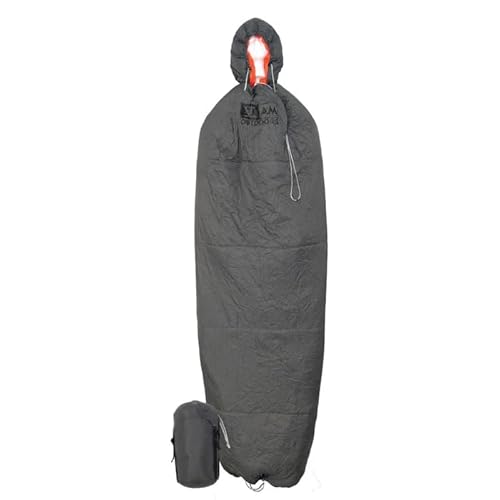
VIAM Outdoors 10-Degree Synthetic Quilt — Only True Cold-Rated Quilt
This is the one genuine cold-weather backpacking quilt in the guide, and its title reads like a checklist of everything the form needs to survive real cold: a stated 10-degree rating, synthetic insulation, a removable hood, a zippered footbox, and pad straps. Read that list slowly, because each item answers a known quilt weakness. The hood restores the head insulation quilts usually surrender. The zippered footbox anchors feet like a bag’s closed end while still opening flat in milder weather. The pad straps hold the edges against the pad so a turn at 3 a.m. does not open a cold channel along your side. Together they make a quilt that behaves, on a cold night, almost like the bag it refuses to be.
The synthetic fill is a deliberate cold-weather choice rather than a budget compromise. Synthetic insulation keeps working when it is damp — from tent frost, from a week of condensation, from the spindrift that finds every shelter seam — and on a multi-night cold trip that resilience is worth more than down’s loft advantage. The Long size named in the title suits taller sleepers, who lose the most warmth to short quilts. Treat the 10-degree figure as the centre of a planning range: on a serious insulated pad, in layered clothing, with the hood on, it is a credible deep-cold tool; on a thin pad it is a number on a listing, and the night will grade your system rather than your intentions.
It is also, frankly, the pick that proves the guide’s opening point. One quilt — one — met the bar of a stated deep-cold rating among the verified listings. If your trips regularly push below its range, the honest purchase is a mummy bag, and no loyalty to the quilt idea should talk you out of the sealed, hooded form that owns that territory.
One practical note on the removable hood, because it changes how the quilt packs and travels: a hood that detaches can be worn on its own around camp in the evening, keeping your head warm while your quilt stays in the tent, dry and lofted, instead of being dragged fireside as a wrap. Small dual uses like that are how a winter kit stays light without feeling sparse, and they reward the camper who thinks of the sleep system as a wardrobe rather than a single object with a single hour of duty.
- Stated rating: 10 degree, per the listing title
- Insulation: synthetic, per the listing title
- Cold-weather kit: removable hood, zippered footbox, pad straps
- Size named in title: Long
- Where to buy: the VIAM Outdoors 10-Degree Synthetic Quilt listing on Amazon — check price on Amazon
Strengths
- The only stated deep-cold rating in this guide.
- Hood, footbox, and straps answer every quilt weakness.
- Synthetic fill keeps insulating when damp.
Trade-offs
- Synthetic fill packs bulkier than equivalent down.
- Still a quilt — edges demand tucking discipline.
- Long size may swamp shorter sleepers with fabric.
Best for: backpackers camping near or below freezing who want quilt freedom with bag-like defences. Not suited for: anyone chasing the absolute lightest pack, who should accept a milder rating instead.

ZIPPIES Thinsulate Camping Quilt — Best Queen-Size Zippered Blanket
Call this one what its title calls it: a blanket — a puffy camping blanket with 3M Thinsulate insulation, queen size, and a zipper. The zipper is the interesting part. Zipped, the blanket closes around a sleeper or two like a loose, roomy bag substitute; unzipped, it lies flat as a full queen-size cover. For couples at a drive-in campsite, for a parent sharing warmth with a child in a big tent, or for one sleeper who wants to be thoroughly buried, that convertible geometry solves the problem blankets usually have, which is falling off the sleeper by degrees all night.
Thinsulate is a known quantity in cold-weather clothing — thin, synthetic, and warm for its thickness — and in a blanket it means real insulation without the lofty bulk of a down piece, plus the damp tolerance synthetics bring. The title also describes it as waterproof and hammock-suitable, and both claims fit a flat, zippered blanket better than a shaped quilt: it can line a hammock, wrap a pair of camp chairs, or cover a picnic table’s worth of people during a cold evening event. What it is not is a backpacking quilt — queen-size anything announces its own verdict on that — so judge it as the heavy, generous, car-camp and cabin blanket it plainly is, and it will not disappoint you.
Its gift framing in the title is worth a sentence too: big warm blankets are the rare outdoor purchase that non-campers also use weekly, on sofas and spare beds, which quietly makes this the hardest-working piece in the guide across a full year.
Care is the other household argument in its favour. A flat synthetic blanket washes and dries with none of the ceremony down demands — no special soap, no hour of tumble drying with balls, no anxiety about clumped fill — and for a piece that will be shared by children, dogs, and guests, that washability is not a footnote. It is the feature that decides whether the blanket is still in service in five years or quietly retired after one unfortunate season of mud and spilled cocoa.
- Insulation: 3M Thinsulate, per the listing title
- Size: queen size, per the listing title
- Closure: zipper, per the listing title
- Form: blanket — flat and convertible, not a shaped quilt
- Where to buy: the ZIPPIES Thinsulate Camping Quilt listing on Amazon — check price on Amazon
Strengths
- Zipper converts blanket coverage into a closed wrap.
- Queen size genuinely covers two sleepers.
- Thinsulate insulates without lofty bulk.
Trade-offs
- Far too large and heavy for backpacking.
- No footbox or pad straps for ground sleeping systems.
- Shared warmth means shared temperature arguments.
Best for: couples and families at car campsites, cabins, and big family tents. A poor fit for: solo backpackers, for whom every dimension of it is the wrong answer.

KawaGebo Sherpa-Lined Camping Blanket — Best Wearable Sherpa Blanket
Another blanket, proudly: the KawaGebo Kamp is a large camping blanket with a sherpa lining, sized at 78 by 56 inches per its title, described as extra warm, thick, and wearable. The wearable part is its party trick — this is a blanket designed to be worn around the campfire, across the shoulders on a cold morning, and then taken straight to bed, which collapses two pieces of camp kit into one. Sherpa lining is the comfort engine: a deep, fleece-like pile that feels warm on contact in a way smooth nylon never does at freezing temperatures, where the first touch of a cold shell can wake a sleeper outright.
Its cold-weather role is honest and specific. As a sole sleeping layer it belongs to cool nights, not freezing ones — no blanket without a footbox or straps should be graded as deep-winter equipment. But layered over a three-season quilt, or wrapped around a camper in a hammock with an underquilt beneath, its thickness and pile add exactly the still-air depth that cold nights consume. The Pale Green colourway named in the title will show camp dirt less than a pale pastel would, a small mercy on a piece designed to be worn outdoors. Buy it as the camp’s shared warm blanket — the one that lives by the fire and ends the night on the coldest sleeper — and it earns its bulk every trip.
Wearable blankets also quietly solve a social problem of cold camps: the hour between dinner and bed, when nobody is in their insulation yet and everybody is cold. A blanket you can wear keeps the evening alive without anyone retreating to their tent at eight o’clock purely for warmth.
Parents should note the other quiet talent of a wearable blanket: it turns a cold child into a warm one without ending the evening. Wrapped shoulders at the fire, hot chocolate surviving another twenty minutes, stories finishing instead of being abandoned to the cold — the blanket’s warmth is social as much as thermal, and on family trips that may be the most valuable specification any piece of gear can carry, even though no listing title will ever print it.
- Lining: sherpa, per the listing title
- Size: 78 by 56 inches, per the listing title
- Form: wearable blanket, thick and extra warm per the title
- Colourway named in title: Pale Green
- Where to buy: the KawaGebo Sherpa-Lined Camping Blanket listing on Amazon — check price on Amazon
Strengths
- Sherpa pile feels warm instantly on cold nights.
- Wearable cut serves fireside hours and sleep alike.
- Generous size layers over any quilt in this guide.
Trade-offs
- Thick and bulky — a car-camp piece, not a pack piece.
- No footbox, straps, or shaped fit for ground systems.
- Sherpa pile collects camp debris and dries slowly.
Best for: car campers and hammock campers wanting one blanket for evenings and layered sleep. Not the right match for: weight-counting backpackers or anyone needing a sole layer below freezing.

ONETIGRIS Down Camping Blanket — Best Packable Down Blanket
ONETIGRIS calls this a down camping blanket, and a blanket it is — warm, lightweight, packable, and puffy, per its title, aimed at cold-weather backpacking among a long list of outdoor uses. The down fill gives it the best warmth-to-weight behaviour of the blanket picks here, and packability is its defining virtue: this is the blanket that can actually ride in a backpack without evicting the food. Its cold-weather job in a backpacking context is usually not to be the whole system but to deepen one — draped over a three-season quilt, it adds a layer of loft exactly where quilts leak heat, across the top, and turns a marginal night into a comfortable one.
Used alone, grade it as a cool-to-cold blanket for sleepers who run warm or camps with shelter from wind, and respect down’s one rule: keep it dry. A blanket has no straps or footbox, so on the ground it needs tucking under the body’s edges to stay put, and restless sleepers will chase it. In a hammock it behaves better, settling into the sling’s curve. The title’s long list of uses — stadium, gardening, beach, picnic — is marketing breadth, but underneath it sits a real point: a packable down blanket is the most borrowable, lendable, generally useful warm object a household can own, and cold-weather campers will find it working twelve months a year.
For the backpacker who owns a quilt rated a little too warm-weather for October, this blanket is the cheaper correction — cheaper than replacing the quilt, lighter than a second bag, and useful on every trip in between.
It also travels beyond the trail better than any shaped quilt can. A flat down blanket folds into the corner of a suitcase, covers a passenger on a cold red-eye, and turns a draughty rental cabin’s optimistic bedding into a proper night’s sleep — which means its cost per night of use collapses across a year in a way specialist gear rarely manages. Campers who travel for work as well as for pleasure will find this the most frequently packed warm object they own.
- Fill: down, per the listing title
- Form: blanket — packable and puffy, per the listing title
- Framing in title: cold weather backpacking and travel
- Closure and fit: none stated — flat blanket form
- Where to buy: the ONETIGRIS Down Camping Blanket listing on Amazon — check price on Amazon
Strengths
- Down warmth that genuinely packs for backpacking.
- Layers over a mild quilt to extend its season.
- Useful far beyond camping across the whole year.
Trade-offs
- Down loses its argument when soaked through.
- Flat blanket form needs tucking to stay in place.
- No stated temperature figure in the title.
Best for: backpackers deepening a mild quilt for cold trips without replacing it. Poorly suited to: wet-climate campers who cannot guarantee dry storage and shelter.

Woolly Mammoth Merino Wool Blanket — Best Wool Blanket for Camp and Car
The Woolly Mammoth is a merino wool blanket in the military style — 66 by 90 inches of it, per its title, in a Moss colourway, described as heavy, thick, and washable. Wool is the oldest cold-weather insulation in this guide and still the most forgiving: it insulates when damp, resists sparks from a campfire that would hole a synthetic shell, never loses loft because it never had any, and asks for no stuff sack, no lofting rest, and no delicate handling whatsoever. A wool blanket thrown in the car in November is still a fully functional warm layer in February, which cannot be said of down left compressed in a boot.
Its limits are equally plain, and the title’s own word — heavy — states the main one. This is not a backpacking blanket in any honest accounting; it is base-camp, car, cabin, and emergency-kit warmth. Within those roles it is close to perfect: wrap it over a sleeping system on the coldest night, line a hammock with it, spread it as the ground layer under pads in a drafty hut, or keep it folded in the vehicle where it will outwait every battery and fuel canister you own. The merino content softens the traditional wool itch, and the generous dimensions cover a double bed at home, where most of its nights will honestly be spent.
There is also a longevity argument no other pick can make. Wool blankets in this military tradition are measured in decades, handed down rather than worn out, and a household that buys one is buying for a generation of winters.
Wool asks for one habit in return: moths and damp storage are its only real enemies, so keep it dry, keep it aired, and store it where air moves. Do that and the blanket will outlast the vehicle it rides in. There are households whose wool blanket has warmed three generations of campers, and nothing else in this guide — no fill, no fabric, no clever closure — can honestly make the same claim.
- Material: merino wool, per the listing title
- Size: 66 by 90 inches, per the listing title
- Style: military style, heavy and thick per the title
- Care note in title: washable
- Where to buy: the Woolly Mammoth Merino Wool Blanket listing on Amazon — check price on Amazon
Strengths
- Insulates when damp and shrugs off campfire sparks.
- No loft to lose — ready after months of storage.
- Large enough for beds, huts, and double duty.
Trade-offs
- Heavy by design; not a carried backpacking piece.
- Wool warmth per weight trails down significantly.
- Flat form needs layering partners for deep cold.
Best for: car campers, cabin owners, and anyone building a winter emergency kit. A weak match for: backpackers, who should admire it from the trailhead and leave it in the car.

iClimb Thinsulate Warm Blanket — Lightest Warm Blanket
The iClimb blanket answers the question the Woolly Mammoth refuses to ask: what does cold-weather insurance weigh when a backpacker carries it? One pound, per its title — a 3M Thinsulate blanket in Dark Grey, described as ultralight and compact, aimed at camping, backpacking, and hiking. Thinsulate’s whole engineering brief is warmth without thickness, which in blanket form means a layer that packs to almost nothing and still takes the edge off a night that turned colder than the forecast promised.
Grade it honestly as insurance rather than as a system. Alone, it is a cool-night blanket. Its real cold-weather value appears in combination: over a quilt whose rating the night is testing, under a quilt as a vapour-taming inner layer, or wrapped around shoulders and legs during a cold camp evening so the main insulation stays in the tent, dry and lofted. Because it is synthetic, it tolerates the damp margins of a trip — the frosty tent wall, the dew-heavy morning — that a down layer would rather avoid, and at one pound the cost of carrying that tolerance is a rounding error in most packs.
Every cold-weather kit has a piece that gets lent, borrowed, and used by the person whose own gear fell short. At this weight and pack size, the iClimb is that piece by design — the blanket a prepared backpacker carries for the group, not just for themselves.
It is worth stating its best solo use plainly, because it is easy to miss: worn inside a sleeping bag or quilt as a liner layer on the coldest single night of a trip, a thin synthetic blanket adds warmth exactly where it is needed while also keeping the main insulation cleaner — and unlike a dedicated liner, it still works as a blanket at every other hour of the trip. Versatility at one pound is not a compromise; it is the entire design brief, delivered.
- Insulation: 3M Thinsulate, per the listing title
- Weight: 1 lb, per the listing title
- Form: blanket — ultralight and compact, per the title
- Colourway named in title: Dark Grey
- Where to buy: the iClimb Thinsulate Warm Blanket listing on Amazon — check price on Amazon
Strengths
- One pound makes it carry-able cold insurance.
- Synthetic fill tolerates damp trip conditions.
- Packs small enough to lend, layer, or forget about.
Trade-offs
- Not a sole layer for genuinely cold nights.
- Thin profile feels less luxurious than lofty blankets.
- No footbox or straps, like every blanket here.
Best for: backpackers wanting a light safety layer against forecast errors. Not suited for: anyone expecting one thin blanket to replace a rated sleep system in winter.
The Line-Up at a Glance
| Piece | What it actually is | Warmth evidence from its title | Cold-weather role |
|---|---|---|---|
| VIAM Outdoors 10-Degree Synthetic Quilt | True backpacking quilt | Stated 10-degree rating | Primary sleep system in deep cold |
| ZIPPIES Thinsulate Camping Quilt | Queen-size zippered blanket | Thinsulate insulation, no figure stated | Two-person car-camp warmth |
| KawaGebo Sherpa-Lined Camping Blanket | Wearable sherpa blanket | Described as extra warm and thick | Fireside wear and layered sleep |
| ONETIGRIS Down Camping Blanket | Packable down blanket | Down fill, no figure stated | Season-extending layer for backpackers |
| Woolly Mammoth Merino Wool Blanket | Heavy wool blanket | Merino wool, military style, thick | Base-camp and vehicle warmth |
| iClimb Thinsulate Warm Blanket | One-pound synthetic blanket | Thinsulate insulation at 1 lb | Light insurance layer in a pack |
Why Does Deep Cold Punish Quilts More Than Bags?
Because cold air is patient and a quilt has seams of behaviour rather than seams of fabric. Every turn rolls a small volume of warmed air out from under the edges and pulls cold air in to replace it — trivial at ten degrees above freezing, serious at ten below. A bag’s zip and hood make that exchange the sleeper’s choice; a quilt makes it the sleeper’s discipline. This is why the VIAM quilt’s straps and hood matter so much, and why experienced winter quilt users move less, tuck more, and treat their sleep clothing as part of the insulation rather than as pyjamas.
Humidity joins the attack from inside. A sleeper exhales moisture all night, and in deep cold that moisture migrates into the insulation and can freeze there across a multi-night trip, adding weight and stealing loft night by night. Synthetic fills and wool tolerate this siege better than down, which is one reason this guide’s cold shelf leans synthetic. Airing insulation in weak winter sun at lunch stops is not fussiness — it is maintenance of the only warmth you have. Readers who know this problem from the other side of the thermometer, in houses where damp air defeats comfort all summer, will recognise the same physics in our guide to Best Air Conditioners for Humid Climates: moisture management is comfort management, indoors and out.
There is a psychological layer to deep cold as well, and pretending otherwise helps nobody plan. A sleeper who expects to be cold sleeps tensely, curls tight, and wakes often; a sleeper who trusts the system relaxes, sprawls, and sleeps through conditions that are objectively identical. Trust is built by testing, by margin, and by small rituals — the hot drink, the checked straps, the hat already on before the chill arrives — and it is a genuine component of warmth, which is why this guide keeps returning to the garden test rather than to ever-warmer purchases.
How Do You Build a Sleep System Around a Cold-Weather Quilt?
Start with the ground, because in winter the ground is the coldest thing you own. Stack insulation beneath you without embarrassment — a foam pad under an inflatable is standard winter practice — and treat any pad that served you in July as a suspect until it proves itself in January. Then dress for bed as if the quilt were only two-thirds of your insulation, because it is: insulated trousers or thick leggings, a real mid-layer top, warm socks reserved for sleep, and a hat or the quilt’s hood deployed before you feel cold rather than after.
Site choice finishes the system. Cold air pools in hollows and along water, so a bench or gentle rise a short walk from the scenic frost pocket can be worth more than another layer. Keep the shelter’s vents cracked even in cold — a sealed tent rains condensation onto your insulation all night — and put tomorrow’s boot liners and water inside the sleeping area where your body’s waste heat keeps them from freezing. None of this is exotic; it is the unglamorous craft that makes a 10-degree quilt perform like one.
Fuel the system, too. Eat a real meal close to bedtime, favouring fats that burn slowly, and take a hot drink if the stove is already out — internal warmth is the one layer that cannot slip off in the night. Campers who treat dinner as part of the sleep system sleep measurably warmer than campers who treat it as a separate event, and the difference costs nothing but timing.
Which Cold-Weather Mistakes Matter Most?
Trusting a summer pad under a winter top layer is the first and worst. The second is believing any single number — a title’s rating is a planning centre under ideal assumptions, and winter specialises in non-ideal assumptions. Third is cotton: cotton clothing worn to bed absorbs moisture, chills against the skin, and stays cold, which is why winter campers treat it as banned from the sleep system entirely. Fourth is eating too little; a body short of fuel runs its furnace low all night, and no blanket in this guide can insulate a fire that is not lit.
A quieter fifth mistake is buying for the coldest night you can imagine rather than the coldest night you actually camp. Systems built for imaginary extremes are heavy, hot, and expensive, and they get left behind — the most dangerous gear failure of all. The maintenance mindset matters here as much as the buying one, the same way it does for the hard-working equipment in our guide to Best Range Hoods With Dual Fans: gear that is understood, aired, and stored properly outperforms neglected gear with better numbers, in a kitchen or on a ridge.
What Does a Stated Rating Actually Promise?
Less than shoppers hope and more than cynics admit. A temperature figure in a listing title is the maker’s own claim, produced under the maker’s own assumptions about the sleeper, the pad, the clothing, and the shelter. There is no guarantee that two brands test alike, which is why this guide treats the VIAM quilt’s 10-degree figure as a planning centre rather than a promise — a number to build margin around, not a floor to stand on. Your own cold tolerance moves the real figure by more than any brand difference does: a well-fed, well-hydrated sleeper in dry layers will find a quilt warmer than the same sleeper cold, hungry, and damp at the end of a hard day.
The practical method is to translate every stated figure through your own history. If you know you sleep colder than your camping partners, plan as though any stated rating were meaningfully milder for you, and buy the margin in layers — clothing, a liner, a blanket from this guide — rather than in a single heroic purchase. If you sleep warm, the opposite translation applies, and you can carry less with a clear conscience. Either way, the figure in the title is the start of a calculation whose other terms are your body, your pad, and your habits, and the campers who understand that are warm at ratings that leave literalists shivering.
One more caution belongs here: a rating says nothing about wind. Moving air strips the warm layer from any insulation’s surface and finds every untucked edge, which is why a sheltered site and a well-pitched tent are worth degrees that no purchase can add. When a forecast pairs deep cold with high wind, believe the wind.
How Do You Sleep Warm in a Hammock When It Is Genuinely Cold?
Cold is a hammock’s home-field disadvantage, because the air beneath a hammock never stops moving and your body compresses everything it lies on. The answer is a system split in two: insulation below that hangs uncompressed — an underquilt — and insulation above, which is where the pieces in this guide earn their hammock keep. The VIAM quilt’s straps matter less in a hammock, where the sling’s own walls hold edges in place, but its hood and footbox matter more, because a hammock sleeper lies stiller and loses heat steadily at the head and feet all night.
Blankets play a real role here too. A blanket like the KawaGebo, worn to the fire and then laid over the top insulation, suits the hammock’s social geometry — hammock camps are lingering camps — while the ZIPPIES blanket’s own title names hammock use for its zippered wrap. What no blanket replaces is the underquilt: skip the underside insulation and no quantity of top warmth will save the night, because the cold is not above you. It is flowing beneath you, all night, at exactly the speed of the wind.
Practical hammock-winter craft adds two habits. Pitch low and use the tarp as a windbreak first and a rain shield second, since wind is the greater thief. And keep a small pad or sit-pad under your feet or shoulders inside the hammock — the two spots where even good underquilts run thin — as targeted reinforcement where your own body tells you the cold gets in.
How Do You Choose Among the Blankets in This Guide?
By the trip they will actually take, not the trip in the photograph. If the blanket rides in a car to a campsite, weight is nearly free and warmth is nearly everything — that logic lands on the Woolly Mammoth for pure, indestructible heat, or the ZIPPIES when two people share one cover. If the blanket must be carried, the arithmetic inverts: the ONETIGRIS down blanket and the one-pound iClimb are the only two here whose weight a backpacker can defend, and between them the choice is down’s loft against synthetic’s damp tolerance, settled by your climate.
The KawaGebo occupies the social middle — too bulky to backpack, too useful around a fire to leave home on a group trip. That is not a compromise position; group warmth is a real function, and the blanket that keeps six people outside together for another hour has done more for the trip than a few degrees of anyone’s sleeping rating. Match the blanket to the gathering it serves and the choice usually makes itself.
Finally, consider the household afterlife. Every blanket here will spend more nights at home than in the field — on beds, sofas, sick days, and guest duty — and the one that suits your home will be used, aired, and cared for, while the one that does not will mildew in a cupboard. Buy the blanket your whole year wants, and the cold weekends will take care of themselves.
How Do You Keep Insulation Dry Across a Multi-Night Cold Trip?
Winter attacks insulation with your own breath. Across a long night, moisture leaves your body, travels outward through the fill, and in deep cold it can condense or freeze inside the layers — a slow theft that leaves night four noticeably colder than night one in the identical system. The countermeasures are habits, not products. Air the quilt or blanket at every stop where sun or wind offers itself, even for twenty minutes over a branch or a tent line; winter sun is weak but the air is dry, and dry moving air pulls moisture out of fill surprisingly fast.
Inside the shelter, vent before you seal. A tent closed tight against the cold becomes a condensation chamber whose walls frost and drip onto your insulation, while a tent with its vents cracked stays colder inside by a degree and drier by a great deal — a trade every experienced winter camper takes. Keep insulation off the tent walls, where condensation gathers, and shake frost from the quilt’s surface in the morning before it melts into the fill as the day warms.
Synthetic pieces and wool forgive failures here, which is a structural reason this guide’s cold shelf leans their way. A down blanket like the ONETIGRIS pick demands the full discipline — dry bag by day, airing at stops, distance from tent walls — and repays it with the best warmth per ounce on the shelf. Choose your insulation partly by how honestly you expect to perform that discipline on day three, tired, in wind, with gloves on.
What Can Stay Home When the Pack Gets Heavy?
Cold-weather packs swell because every item argues it might save the trip. Some arguments are true: the winter pad stack, the sleep clothing, the hat, the extra socks sealed in a dry bag. Some are fear wearing a gear label. A second full blanket “just in case” duplicates a function your layers already serve — this guide’s one-pound iClimb exists precisely to answer that fear at a weight nobody can argue with, and it is the only spare-insulation argument a backpacker needs to win.
The stove, fuel, and hot food deserve their weight in a way spare insulation does not, because calories are insulation you carry in a different form. A hot meal before bed warms a sleeper more reliably than an extra blanket layer, and it warms morale too, which on the third cold night is its own safety equipment. When forced to choose between another warm layer and another day of real food, experienced winter campers choose the food and sleep in their jackets.
What must never stay home is the margin for the feet and head — the warm socks, the hat, the liner gloves — because extremities end trips. They weigh almost nothing, they fail first, and every cold-weather guide including this one will keep repeating it until the last reader packs them: the difference between a hard night and a dangerous one is usually measured at the toes.
Navigation for a white-out morning, a headlamp with real batteries, and a way to make hot water complete the honest list. None of these is insulation, and all of them have rescued more cold trips than any blanket ever sewn. Pack the system, not the category, and the weight argument settles itself: everything you carry is either keeping you warm, feeding you, guiding you, or it is luggage wearing a costume.
How Should You Test a Cold-Weather System Before It Counts?
At home, in the garden, on the coldest night you can arrange — and for the whole night, not an hour. Cold systems reveal themselves at 4 a.m., when your body has burned through dinner and the air reaches its minimum, and a system that felt heroic at bedtime can be merely adequate by then. Test with the exact pad stack, clothing, and shelter you intend to carry, and write down the overnight low beside a note of where the cold arrived first: feet, back, shoulders, or face. Each address has a different fix, and guessing wrong wastes both money and the next trip.
If the test fails, change one variable and retest rather than replacing the system. Add the blanket layer, swap the socks, stack the second pad — winter warmth is usually assembled from two or three small corrections, not one large purchase. The campers who sleep warm in January are rarely richer than the ones who shiver; they are simply the ones who did their failing in the garden, where failure costs a walk back indoors instead of a ruined expedition.
Final Recommendation
If you backpack in real cold and want a quilt, the VIAM Outdoors 10-Degree Synthetic Quilt is the guide’s only honest answer — hood, footbox, straps, synthetic resilience, and a stated rating to plan around. Everyone else should buy the layer their trips actually need: the ZIPPIES blanket for two-person car camps, the KawaGebo for fireside-to-bed warmth, the ONETIGRIS down blanket to deepen a mild backpacking quilt, the Woolly Mammoth for base camps and vehicles, and the one-pound iClimb as insurance in any pack. And if your nights run colder than this shelf reaches, buy the mummy bag without a flicker of guilt — when the temperature falls far enough, the warmest choice is the sealed one, and the quilt will be waiting for you in spring.
Whatever you buy, test it in the garden before the mountain, and write down what the cold taught you. A cold-weather system you understand is worth more than a warmer one you are guessing about, and every piece on this shelf — quilt, blanket, or wool — performs best in the hands of a camper who has already slept one honest test night underneath it.
Frequently Asked Questions
Can a quilt really work below freezing?
Yes, with conditions: a quilt designed for it — hood, footbox, pad straps, like the VIAM pick — on a genuinely winter-rated pad, with layered sleep clothing and disciplined tucking. What cannot work below freezing is a mild-weather quilt asked to improvise, or any quilt on a summer pad.
Why are there so few true 0-degree quilts?
Because the sealed mummy bag is simply better at that job, so makers build bags for deep cold and quilts for the milder majority of nights. The honest quilt market clusters where quilts win — roughly the three-season range, with a few determined designs, like the 10-degree VIAM, pushing into real winter.
Is synthetic or down better for cold-weather trips?
Down wins on warmth per ounce in dry cold. Synthetic wins when trips are long, damp, or frost-prone, because it keeps insulating when wet and dries in the field. Multi-night winter trips tilt synthetic; short, dry, weight-critical trips tilt down.
Can I just layer two mild quilts for winter?
You can, and it works better than folklore suggests — two quilts layered trap air between them and let you split the system across seasons. Mind the combined weight and the inner quilt’s edges, and test the stack at home before trusting it anywhere remote. Pay attention, too, to which quilt goes outside: put the one with the more weather-resistant shell on top, where tent condensation and frost will reach it first, and keep the loftier, more delicate piece protected underneath where it can simply do its warming.
How do I keep my water and boots from freezing overnight?
Bring both inside the sleeping area: water bottles stored upside down so the neck does not freeze shut first, boot liners in a bag at the foot of your pad. Your sleep system sheds enough waste heat to protect them, and a frozen boot at dawn is a misery no blanket can fix afterwards.
Should beginners start with a quilt or a bag for winter?
A bag, honestly — winter is the wrong classroom for learning quilt technique, because the cost of a draft at deep-cold temperatures is a ruined night rather than a lesson. Learn quilts across spring and autumn, where mistakes are cheap, and carry that skill into winter later with a cold-rated design like the VIAM and a system you have already tested at home.
Related Guides
For the milder half of the year, our guide to Best 3-Season Sleeping Quilts covers the ratings and forms that own spring through autumn, which is where most quilt campers honestly live, most of the time, in most of the country, year after year, from the first thaw to the last hard frost of autumn across the whole long season of the camping year.



[…] on a garden night before a mountain one. When your trips run genuinely cold, our companion guide to Best Cold-Weather Backpacking Quilts covers the heavier end of this same shelf, including the honest limits of the quilt form itself in […]