What's inside
- Key Takeaways
- Quick Picks
- How We Chose These Picks
- How Do the Six Garage Refrigerators Compare at a Glance?
- What Does Garage Ready Mean, Exactly?
- How Do You Verify a Refrigerator’s Ambient Range on the Spec Sheet?
- Why Do Cold Garages Defeat Ordinary Fridge-Freezers?
- How Should You Place and Ventilate a Refrigerator in a Garage?
- Top Mount or Convertible Upright: Which Garage Format Suits You?
- How Do You Measure a Garage for a Full-Size Refrigerator?
- How Do You Monitor a Garage Fridge So Problems Surface Early?
- What Does a Garage Refrigerator Cost to Run?
- How Do You Organise an Overflow Refrigerator So Food Gets Used?
- How Do You Maintain the Seals, Coils and Interior of a Garage Fridge?
- How Does a Garage Fridge Behave During a Power Cut?
- Which Households Get the Most From a Garage Refrigerator?
- What Mistakes Do Garage Refrigerator Buyers Make Most Often?
- Final Recommendation
- How Do You Winterise and Summer-Proof the Same Garage Fridge?
- Frequently Asked Questions
- How Do You Decide Between a New Garage Fridge and Moving the Old Kitchen One Out?
- Related Guides
As an Amazon Associate I earn from qualifying purchases. This post may contain affiliate links at no extra cost to you.
cottageverdict.com is reader-supported. When you buy through links on our site, we may earn an affiliate commission.
Where to buy: all six refrigerators below are sold on Amazon, and each pick links to its listing. Read this guide’s labels with care — only some of these listings actually claim garage readiness, and where a listing stays silent we say so plainly and show you how to check the manufacturer’s specification sheet yourself.
The best garage ready refrigerators are asked to do a job no kitchen fridge faces: keep food safe in a room that bakes in August and freezes in January. That phrase, garage ready, has a precise meaning that marketing often blurs. It refers to the range of surrounding — ambient — temperatures within which the refrigerator is designed and rated to operate properly. A fridge rated for a wide ambient range carries a compressor, thermostat logic and insulation chosen for a garage’s swings; a fridge rated only for indoor conditions may keep its cool in summer yet let its freezer drift upward in deep cold, when the compressor rests too long because the room itself feels refrigerated.
This round-up gathers the full-size top-freezer models and convertible uprights that buyers cross-shop for garage duty, and it grades their paperwork as carefully as their shelves. Two picks state garage readiness in their listings outright. The Kenmore pair, the KoolMore top freezer and the Electactic make no such claim in the listing text we verified, so their reviews say exactly that, and the guide teaches you the spec-sheet check that settles the question for any model, listed here or not.
Key Takeaways
- Garage ready means a rated ambient operating temperature range — the temperatures of the room around the fridge, not the food inside.
- Only the BLACK+DECKER convertible and the small KoolMore upright claim garage readiness in their listing titles here.
- The Kenmore pair, KoolMore top freezer and Electactic listings do not state an ambient range — verify on the manufacturer’s spec sheet before garage use.
- Cold garages threaten the freezer section of a fridge-freezer; hot garages overwork any compressor. Both directions matter.
- Convertible uprights switch between fridge and freezer, which suits seasonal overflow better than a fixed split.
- Measure the garage bay, the door swing and the delivery route before ordering any full-size cabinet.
Quick Picks
| Pick | Badge | Why it earns its place |
|---|---|---|
| Kenmore 18.1 Cu Ft Top Mount Refrigerator Metallic | Best Classic Top Mount — Range Unstated | An 18.1 cubic foot, 30 inch wide top mount in metallic steel with adjustable shelving; ambient range not stated in the listing. |
| Kenmore 18.1 Cu Ft Top Mount Refrigerator White | Best White Finish — Range Unstated | The same Kenmore layout in white with gallon door storage; garage rating likewise unconfirmed by the listing. |
| KoolMore 30 Inch 18 Cu Ft Top Freezer Refrigerator | Best Stainless Full Size — Range Unstated | A stainless 18 cubic foot top freezer cabinet for buyers who want the kitchen format; check the spec sheet for garage use. |
| Electactic 17.6 Cu Ft Top Freezer Refrigerator | Best Digital Controls — Range Unstated | A 17.6 cubic foot two-door with digital temperature management; ambient range not given in the listing. |
| BLACK+DECKER 17 Cu Ft Convertible Freezer Refrigerator | Best Convertible — Garage Positioned | A 17 cubic foot upright that converts between freezer and refrigerator, positioned by its listing for garage duty. |
| KoolMore 7 Cu Ft Garage Ready Convertible Upright | Explicitly Garage Ready — Compact | A 7 cubic foot manual defrost upright that states garage ready in its name, convertible between freezer and fridge. |
How We Chose These Picks
We started with the paperwork, because in this category the paperwork is the product. Each listing was read for an explicit garage-ready claim or a stated ambient operating range. Models whose titles claim garage readiness were labelled as such; models whose listings stay silent were kept — they are the full-size cabinets buyers genuinely cross-shop — but labelled “range unstated”, with the verification method taught in this guide rather than a reassurance invented on their behalf.
Format came second. The list deliberately spans the three shapes of garage cold storage: classic top-mount fridge-freezers around 18 cubic feet, a large convertible upright that can be all fridge or all freezer, and a compact convertible for smaller reserves. Capacities, widths and features quoted here come from the verified listings; where a listing truncates a detail, the review notes the limit instead of completing the sentence with a guess.
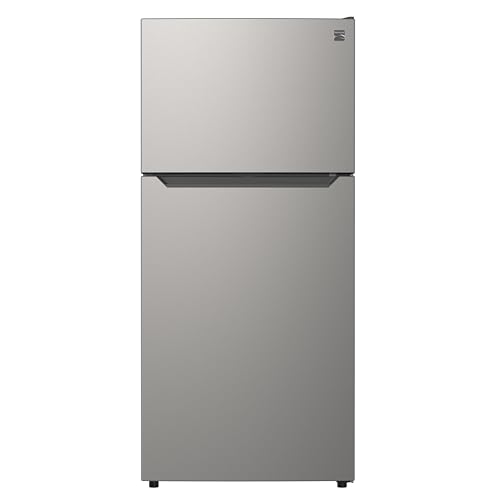
Kenmore 18.1 Cu Ft Top Mount Refrigerator Metallic — Best Classic Top Mount — Range Unstated
Kenmore’s 18.1 cubic foot top mount is the archetypal second refrigerator: 30 inches wide, freezer above, fridge below, adjustable shelving and crisper drawers doing the organisational work, finished here in a metallic steel the listing calls FPR. As a kitchen-format cabinet for a basement, a utility room or a mild-climate garage, the formula is proven and the capacity honest — big enough for the weekly shop’s overflow, drinks and the holiday bird, small enough to stand in a single garage bay without evicting the car.
The garage question must be answered straight: the listing text verified for this guide does not state a garage-ready rating or an ambient operating range for this model. That silence is not proof the fridge cannot handle a garage — many top mounts cope in temperate outbuildings — but it means the decision belongs to the manufacturer’s specification sheet, not to optimism. Find the rated ambient range in the spec sheet or manual before ordering for an unheated space, using the method in the verification section below, and let that number, in your climate, make the call.
- Capacity: 18.1 cu ft top mount
- Width: 30 inches
- Interior: adjustable shelving, crisper drawers
- Garage rating: not stated in listing — check spec sheet
Strengths
- Classic full-size format with flexible shelving
- Metallic finish suits a smart utility space
- Capacity suits overflow, drinks and holiday food
Trade-offs
- No ambient range stated in the verified listing
- Top freezer format splits space between fridge and freezer
- Garage suitability must be confirmed before purchase
Best for: a second fridge in a mild space, once the spec sheet is checked. Not suited for: buyers needing a stated garage rating out of the box.

Kenmore 18.1 Cu Ft Top Mount Refrigerator White — Best White Finish — Range Unstated
This is the same Kenmore proposition in white: 18.1 cubic feet, a 30 inch width, adjustable shelving and crispers, with the listing adding gallon door storage to the description — the deep door bins that swallow milk jugs and two-litre bottles and free the main shelves for food. White remains the pragmatic finish for a working garage or basement, since it shows less of the dust film and matches the appliances these cabinets usually replace.
Its garage paperwork mirrors its sibling’s exactly: no ambient operating range and no garage-ready claim appear in the verified listing text. Treat the two Kenmores as one model in two coats, choose by finish and availability, and run the same spec-sheet verification before committing either to an unheated garage in a climate with real winters or serious summers. In a temperate or attached garage that rarely leaves the indoor band of temperatures, the case for the fridge is stronger — but that judgement should still start from the manufacturer’s stated range, not from a neighbour’s anecdote.
- Capacity: 18.1 cu ft top mount
- Width: 30 inches
- Interior: adjustable shelving, crispers, gallon door bins
- Garage rating: not stated in listing — check spec sheet
Strengths
- Gallon door storage frees the main shelves
- White finish hides garage dust gracefully
- Same proven layout as the metallic version
Trade-offs
- Ambient range unconfirmed by the listing
- Duplicates the metallic pick rather than extending it
- Fixed fridge-freezer split limits bulk freezing
Best for: white-appliance households wanting a classic overflow fridge. Not suited for: extreme-climate garages without spec verification.

KoolMore 30 Inch 18 Cu Ft Top Freezer Refrigerator — Best Stainless Full Size — Range Unstated
KoolMore’s entry is a freestanding, full-size 18 cubic foot top freezer refrigerator in stainless steel, 30 inches wide — the kitchen format, executed plainly, at a size that suits a household’s main overflow duties. Stainless in a garage is a matter of taste and toughness: the finish resists the knocks of a working space and wipes clean of the grime outbuildings deposit, though it will record fingerprints faithfully if the cabinet doubles as a drinks fridge for garden gatherings.
On the question this guide exists to ask, the KoolMore’s verified listing is silent: no garage-ready claim and no ambient range appear in the text we checked. KoolMore sells other models — including the compact upright later in this list — with garage readiness in the name, which makes it doubly important not to borrow the claim across the range. Verify this model’s rated range on its own spec sheet. Bought for a kitchen-adjacent space, a basement or a verified-mild garage, it is a straightforward full-size cabinet; bought on an assumption, it is a gamble this guide declines to dress up.
- Capacity: 18 cu ft top freezer
- Width: 30 inches, freestanding
- Finish: stainless steel
- Garage rating: not stated in listing — check spec sheet
Strengths
- Full-size stainless cabinet suits heavy overflow duty
- Familiar top freezer layout needs no learning
- Freestanding format simplifies placement
Trade-offs
- No garage rating in the verified listing text
- Brand’s garage-ready models are different products
- Stainless shows fingerprints in social spaces
Best for: buyers wanting a stainless full-size second fridge, verified first. Not suited for: anyone assuming the brand name implies a garage rating.

Electactic 17.6 Cu Ft Top Freezer Refrigerator — Best Digital Controls — Range Unstated
Electactic’s 17.6 cubic foot two-door fridge-freezer distinguishes itself with digital temperature management, a feature with real value in a garage context: a digital readout tells you what the cabinet believes its temperature is, which beats interpreting a numbered dial whose meaning shifts with the seasons. As a full-size refrigerator for overflow, drinks and freezer staples, the format is conventional and the capacity a fraction below the 18 cubic foot picks, a difference no household will detect in use.
The paperwork verdict repeats, and repetition is the honest cost of this category: the verified listing does not state an ambient operating range or claim garage readiness. Digital controls help you monitor a garage fridge; they do not widen the temperatures it is rated to work in. If your garage is attached, shaded and temperate, verify the range and proceed if it fits; if your garage freezes hard or bakes, the two picks below that actually claim the rating deserve your money first.
- Capacity: 17.6 cu ft top freezer
- Controls: digital temperature management
- Format: two-door fridge freezer, full size
- Garage rating: not stated in listing — check spec sheet
Strengths
- Digital readout makes monitoring straightforward
- Full-size capacity for household overflow
- Conventional layout suits any second-fridge role
Trade-offs
- No ambient range given in the listing
- Slightly smaller than the 18 cubic foot picks
- Lesser-known brand — check support details
Best for: buyers who value a digital readout in a mild space. Not suited for: harsh garages bought on hope instead of a rating.

BLACK+DECKER 17 Cu Ft Convertible Freezer Refrigerator — Best Convertible — Garage Positioned
Here the category changes shape. BLACK+DECKER’s 17 cubic foot upright converts between freezer and refrigerator, so the whole cabinet can be whichever appliance the season demands: a deep freeze for the autumn glut, a drinks-and-overflow fridge for the summer party run. Glass shelves suit fridge mode’s visibility, and the listing positions this model for garage use — its title carries the garage designation that the top-mount picks above do not claim.
Convertibility is the strongest idea in garage cold storage, because garage needs are seasonal in a way kitchen needs are not. The cautions are the upright ones: a front door spills cold at every opening, manual habits matter, and you should still confirm the rated ambient range on the spec sheet, since a garage label and a wide stated range are related but not identical promises. Even with that check advised, this is the most purpose-built large pick in the guide, and households with swinging seasonal needs should start here.
- Capacity: 17 cu ft upright
- Modes: convertible freezer / refrigerator
- Interior: glass shelves
- Garage rating: positioned for garage use in listing — confirm range
Strengths
- Whole cabinet converts with the household’s seasons
- Garage positioning stated by the listing
- Large single-space storage takes bulky items
Trade-offs
- Upright door loses cold at every opening
- One mode at a time — no split fridge and freezer
- Stated range still worth confirming on the spec sheet
Best for: seasonal overflow that swings between freezing and chilling. Not suited for: households needing fridge and freezer space simultaneously.

KoolMore 7 Cu Ft Garage Ready Convertible Upright — Explicitly Garage Ready — Compact
The smallest pick carries the clearest paperwork: KoolMore puts garage ready in this 7 cubic foot upright’s name, alongside a convertible freezer-refrigerator design and manual defrost, in stainless steel. Seven cubic feet is the reserve size — the batch-cooking store, the meat order, the drinks fridge in summer mode — and a compact upright footprint lets it stand in a garage corner or utility space that could never host an 18 cubic foot top mount.
Manual defrost is the honest trade at this size and positioning: no frost-free cycling, a defrost chore on the calendar, and in exchange a cabinet that holds its temperature with chest-like stubbornness and sips power between openings. Verify the stated ambient range in the documentation, as with every pick here, but recognise the difference in starting position: this model was named for the job this guide is about. Small households, and big households wanting a dedicated garage reserve beside a kitchen fridge, will both find a role for it.
- Capacity: 7 cu ft upright
- Modes: convertible freezer / refrigerator
- Defrost: manual
- Garage rating: garage ready stated in the product name
Strengths
- Garage readiness is the model’s stated purpose
- Convertible modes suit seasonal reserve duty
- Compact upright footprint fits tight corners
Trade-offs
- Manual defrost adds a periodic chore
- Seven cubic feet will not host a holiday crowd’s food
- Upright format loses cold at the door
Best for: a dedicated garage reserve at a compact size. Not suited for: households needing a full second fridge-freezer.
How Do the Six Garage Refrigerators Compare at a Glance?
| Model | Capacity | Format | Garage paperwork |
|---|---|---|---|
| Kenmore 18.1 Cu Ft Top Mount Refrigerator Metallic | 18.1 cu ft | Top mount | Range not stated in listing |
| Kenmore 18.1 Cu Ft Top Mount Refrigerator White | 18.1 cu ft | Top mount | Range not stated in listing |
| KoolMore 30 Inch 18 Cu Ft Top Freezer Refrigerator | 18 cu ft | Top freezer | Range not stated in listing |
| Electactic 17.6 Cu Ft Top Freezer Refrigerator | 17.6 cu ft | Top freezer | Range not stated in listing |
| BLACK+DECKER 17 Cu Ft Convertible Freezer Refrigerator | 17 cu ft | Convertible upright | Positioned for garage use |
| KoolMore 7 Cu Ft Garage Ready Convertible Upright | 7 cu ft | Convertible upright | Garage ready in the name |
What Does Garage Ready Mean, Exactly?
Strip the phrase to its engineering and it says one thing: the manufacturer has designed and rated the refrigerator to operate across a wider range of ambient temperatures than a standard indoor model. Ambient means the air around the cabinet — the garage itself. A typical indoor fridge expects the room to stay in a comfortable domestic band. A garage-ready model expects the room to misbehave, and carries the compressor capacity, refrigerant behaviour, insulation and control logic to keep the food compartments at their set temperatures while the room swings.
The two ends of the range fail differently, which is why the rating has to cover both. In heat, the challenge is rejection: the cabinet must dump the warmth it removes into an already hot room, and an under-rated compressor runs constantly, wears early and may still lose ground on the hottest afternoons. In cold, the challenge is stranger. A fridge-freezer with a single thermostat sensing the fridge section may barely run at all when the garage sits near fridge temperature, so the freezer section quietly warms toward the room’s chill — cold enough to feel safe, warm enough to ruin ice cream and shorten food’s safe life. Garage-ready designs address that logic directly.
What the phrase does not mean is equally important. It is not a promise about capacity, energy use or frost behaviour, and it is not transferable between models of the same brand. It lives in a stated temperature range in the documentation. If a listing uses the words without the range, treat the words as a lead to follow, and the range — when you find it — as the fact to buy on.
How Do You Verify a Refrigerator’s Ambient Range on the Spec Sheet?
Start on the manufacturer’s own page for the exact model number, not the retail listing. Look for the specifications or installation document, and search within it for the words ambient, operating range, climate class or installation temperature. Manufacturers state the range in degrees, sometimes as a climate class code. Write the two numbers down. They are the model’s contract with your garage.
Next, measure your garage against that contract honestly. A minimum-maximum thermometer, left in the garage for a few weeks across a seasonal extreme — or remembered from years of living with the space — tells you the room’s real range. Attached garages buffered by the house swing far less than detached ones; a metal-roofed outbuilding in a hot climate can exceed temperatures owners guess by a wide margin. If your garage’s extremes sit inside the model’s stated range with margin to spare, the pairing is sound. If they meet the range exactly at the edge, expect the fridge to work hardest precisely when the weather is worst.
Where the documentation cannot be found, ask the manufacturer directly with the model number in hand, and treat an unanswered question as an answer. Apply this method to the four picks in this guide whose listings stay silent — the two Kenmores, the KoolMore top freezer and the Electactic — before any of them is ordered for an unheated space. It takes ten minutes, and it converts the largest uncertainty in garage refrigeration into a pair of numbers.
Why Do Cold Garages Defeat Ordinary Fridge-Freezers?
The mechanism deserves understanding, because it explains most garage fridge disappointments. In a typical top mount fridge-freezer, one cooling system serves both compartments, and the thermostat usually listens to the fresh food section. On a mild day the system runs in balanced cycles and both sections hold their temperatures. As the garage cools toward refrigerator temperature, the fresh section needs almost no cooling, so the system rests — while the freezer section, which needs to sit far below the room’s cold, slowly drifts upward with no cooling calls to rescue it.
The symptoms are treacherous because nothing looks broken. The fridge feels cold, the light works, the motor hums occasionally — and the ice cream is soft, the frozen peas are clumping, and meat is spending its days at temperatures that shorten its safe life. Owners often discover the truth in spring, or from a thermometer, which is why this guide keeps recommending one. Garage-ready models counter the problem with control designs that keep the freezer honest in the cold, and some standard fridges offer garage heater kits for the same reason.
Climate decides whether this section is your problem. A garage that rarely drops below the mid-forties Fahrenheit may never trigger the failure; a garage in a northern winter lives inside it for months. Know your room’s winter floor as precisely as its summer ceiling, because a fridge can be defeated by either.
How Should You Place and Ventilate a Refrigerator in a Garage?
Give the cabinet the coolest, driest wall the garage offers, out of direct sun and away from the heat of a parked car’s engine bay, a boiler or a dryer vent. Refrigerators reject heat through their sides or rear, and the clearances in the manual are the space that heat needs to escape; a fridge boxed in by stored clutter will run longer, louder and hotter than the same fridge with air around it. Level the cabinet so the doors seal and swing true, and keep the top clear rather than treating it as a shelf for paint tins.
Power should be boring and dedicated where possible: a grounded outlet on a circuit that does not also feed heavy workshop tools, with the cord protected from pinching, chafing and the daily traffic of feet and tyres. Know which breaker serves the fridge, and consider a simple temperature alarm or a smart plug monitor if the cabinet holds a season of food — the cost of finding out about a tripped breaker from the smell is always higher.
Finally, plan for water and dust. Garages admit both: meltwater and driven rain at the door, dust on every surface. A cabinet raised slightly from a damp floor where the maker allows, a seal wiped monthly, and a condenser area kept vacuumed will together add years to a garage fridge’s working life, whichever pick in this guide you choose.
Top Mount or Convertible Upright: Which Garage Format Suits You?
The top mount is the familiar compromise: fridge and freezer in one cabinet, each permanently sized. It suits the household whose garage fridge mirrors the kitchen one — weekly overflow below, a modest frozen reserve above — and it asks nothing new of anyone. Its limits are structural. The freezer section is the smaller share, so bulk freezing overflows quickly, and the single-system cold-garage behaviour described earlier applies to the format in general, which is why the rating check matters so much for these picks.
The convertible upright makes the opposite bet: one large space that is wholly fridge or wholly freezer, changed at a control. For seasonal households — freezing in autumn, chilling drinks and party food in summer, holding a holiday bird in December — that flexibility maps onto real life better than a fixed split. The cost is simultaneity: in freezer mode you have no garage fridge, and in fridge mode no garage freezer, so households needing both at once, all year, should pair a convertible with the kitchen fridge’s own capacity or choose the top mount.
Size then arbitrates. The 17 cubic foot BLACK+DECKER serves as a household’s main garage cabinet; the 7 cubic foot KoolMore serves as a dedicated reserve beside another fridge. Many contented garages end up with the second arrangement over time — a verified top mount for daily overflow and a small convertible for the seasons — but either pick earns its place alone if its role is chosen honestly.
How Do You Measure a Garage for a Full-Size Refrigerator?
Begin with the bay the fridge will occupy: width with the door’s full swing allowed, depth with clearance behind for the plug and air, and height under any shelving or the garage door’s travel path. A 30 inch wide top mount sounds modest until its door needs to open past ninety degrees against a parked car. Mark the footprint on the floor with tape and live with it for a day, walking past with the bins, the bikes and the shopping, because a fridge that fits on paper can still make a garage miserable in practice.
Then measure the route as ruthlessly as the destination. The cabinet must travel from the street through the garage door or a side door, around vehicles and stored gear, and full-size refrigerators are deeper with their doors on than many doorways expect. Note the tightest point, compare it with the cabinet’s stated dimensions with doors removed if the maker allows that, and clear the route before delivery day rather than during it.
Leave the last check for the floor. Garages slope toward their doors for drainage, and a fridge standing on a slope needs careful levelling so its doors seal and its condensate behaves. A level cabinet on a sloped floor is normal practice — that is what the adjustable feet are for — but discovering a dramatic slope with the delivery crew waiting is nobody’s preferred order of events.
How Do You Monitor a Garage Fridge So Problems Surface Early?
Put a thermometer in each compartment and read them weekly for the first season. That simple habit converts every anxiety in this guide into data: you will learn what your garage does to the cabinet in a heatwave and in a cold snap, whether the freezer section drifts when the room turns cold, and whether your settings hold the fresh section where food keeps best. A digital thermometer with a memory of extremes is better still, because the failure that matters may happen at 3 a.m. in a January cold snap, not during your Sunday check.
Settings should follow the seasons at the margins. Many owners find a single correct setting serves all year in a rated cabinet; owners of unrated cabinets in borderline garages sometimes adjust a step colder entering winter, to keep the system cycling, and a step back in spring. Treat such adjustments as experiments verified by the thermometers, never as folklore, and if the freezer section cannot hold its temperature in your coldest weeks whatever you do, accept the verdict: the cabinet and the room are mismatched, and the fix is a rated model or a different room.
Keep a brief note of what you learn the first year — the garage’s extremes, the settings that worked, the dates of any drift. That note is the spec sheet your own house writes, and it makes every later appliance decision in the same garage faster and surer.
What Does a Garage Refrigerator Cost to Run?
A refrigerator is one of the few appliances that never sleeps, so its running cost is a slow accumulation rather than an event. Garage conditions tax it at both extremes: heat lengthens every cycle, and an unrated cabinet in a cold room may appear cheap to run precisely because it has stopped doing the freezer’s job — a saving no household wants. A properly rated cabinet, correctly sited with its clearances open, runs as predictably in a garage as its twin would in a kitchen.
Owners hold most of the levers. Seals wiped and intact keep the cold in; coils and vents kept clear of garage dust let the heat out; a cabinet kept reasonably full steadies its internal temperature against door openings; and settings verified by thermometer avoid paying for degrees colder than food safety requires. The convertible uprights add one more lever: in fridge mode they work far less hard than in freezer mode, so a household that converts seasonally will see its running costs breathe with the calendar.
Set against those costs is the waste a garage fridge prevents — the bulk buy stored properly, the leftovers kept, the second shop avoided. Households that use the space with intent rarely find the arithmetic close.
How Do You Organise an Overflow Refrigerator So Food Gets Used?
A second fridge fails socially before it fails mechanically: it becomes the place food goes to be forgotten at a more comfortable temperature. Prevent that fate with zones and a short memory. Dedicate shelves by role — drinks and condiments, this week’s overflow, the reserve that waits for the kitchen fridge to empty — and keep the oldest items at the front of each zone, where the next hand in the door meets them first.
Label with dates anything that leaves its original packaging, and run a five-minute audit whenever the weekly shop arrives: what must move up, what must be used this week, what has quietly passed the point of trust. The freezer section rewards the same discipline as any freezer in this guide’s family — flat packs, labelled portions, an inventory habit — with the extra warning from earlier in this guide: in a cold garage, check the freezer thermometer before assuming the oldest items are still in the condition you left them.
Households that entertain will find the garage fridge becomes party infrastructure: drinks chilled in bulk, platters held safely, the kitchen fridge freed for the food being cooked. That role alone justifies the cabinet for many owners, provided the everyday discipline keeps it a working fridge rather than a cold cupboard of mysteries.
How Do You Maintain the Seals, Coils and Interior of a Garage Fridge?
Garages are dusty workshops that happen to contain a food appliance, and maintenance is where that truth gets managed. Wipe the door seals monthly, working into the folds where crumbs and moisture gather, and test the grip with a sheet of paper at several points; a seal that leaks in a garage leaks against a bigger temperature difference than it ever would in a kitchen. Keep the area around the cabinet vacuumed, and clean the condenser coils or grille on the schedule the manual sets, because a dust blanket over the heat-exchange surfaces is a tax on every cycle the compressor runs.
Inside, the routine mirrors a kitchen fridge with one addition: vigilance about the freezer section’s temperature through the cold months, for the reasons this guide has explained at length. Defrost any manual-defrost convertible before frost begins stealing capacity, wipe spills before they freeze into archaeology, and keep an open box habit of replacing anything that has begun to smell like the garage rather than the food.
Once a year, pull the cabinet forward if it can be done safely, vacuum behind and beneath it, inspect the cord and plug, and confirm the cabinet still sits level after a year of garage life. That single annual hour prevents most of the slow failures — overheating, seal leaks, pest surprises — that end garage fridges early.
How Does a Garage Fridge Behave During a Power Cut?
Better than you fear, if the doors stay shut. A full refrigerator holds safe temperatures for several hours without power, and a freezer section or a convertible in freezer mode holds far longer, especially in a cold garage where the room itself is helping. The discipline is the same as with any cold appliance: do not open the doors to inspect the situation, because every opening spends cold that cannot be replaced until the power returns, and group your retrieval into a single visit if food must come out.
When power returns, check the thermometers before judging the contents. Fresh food that stayed at safe refrigerator temperatures can be used promptly; freezer food still holding ice crystals can generally be cooked or refrozen with some loss of quality; anything that sat warm for hours should be discarded on the thermometer’s evidence rather than rescued on optimism. A garage fridge that rides out storms well is usually the one that was full, sealed and verified in ordinary times — resilience is a habit, not a feature.
Households in outage-prone areas sometimes add a simple alarm that sounds when the interior warms or the power fails. For a cabinet holding a season of frozen food, that small device converts a silent loss into a solvable problem, and it earns its place beside the thermometer as standard garage equipment.
Which Households Get the Most From a Garage Refrigerator?
Bulk buyers and big families lead the list, because the arithmetic of their shopping collapses without somewhere cold to put it. Entertainers follow: a household that hosts regularly lives a different life when drinks, platters and desserts can be chilled in bulk without evicting the week’s food from the kitchen fridge. Gardeners and preserving households gain a staging post between harvest and freezer, a place where produce can wait at proper cold for its processing day rather than wilting on a counter.
Multigenerational homes and homes with a lodger or a small food business feel the benefit daily, since a second cabinet ends the territorial negotiations that a single fridge imposes. Even a household of two can justify the compact KoolMore in this guide if it batch cooks, brews, or simply lives far enough from the shops that a reserve fridge changes the weekly rhythm.
The households that benefit least are those whose kitchen fridge already runs half empty. A garage cabinet bought for a life the household does not lead becomes a cold, humming cupboard of forgotten condiments. Audit the overflow honestly — a holiday week, a bulk shop, a party — and if the overflow is real and recurring, the garage fridge will earn its floor space within the first month.
What Mistakes Do Garage Refrigerator Buyers Make Most Often?
The defining mistake of this category is buying the words instead of the range: ordering any full-size fridge for a harsh garage because a headline, a neighbour or a brand’s other model suggested it would cope. Four of this guide’s six picks do not state a range in their listings, and the correct response is verification, not vibes. The second mistake is measuring only the summer problem — owners in cold climates forget that January defeats more garage fridge-freezers than July ever will.
Placement and monitoring errors follow: cabinets sealed into clutter with no airflow, cords sharing circuits with table saws, and not a thermometer in sight while the freezer section drifts. The final mistake is organisational — an overflow fridge with no zones and no audit, quietly converting good food into compost at a chilled pace. Every one of these is avoidable, and the avoidances cost less than the appliance does.
Final Recommendation
If your garage has real seasons, start with the picks that claim the job: the BLACK+DECKER 17 Cu Ft Convertible Freezer Refrigerator for full-size seasonal flexibility, or the KoolMore 7 Cu Ft Garage Ready Convertible Upright for a compact, explicitly garage-ready reserve. Choose a top mount such as the Kenmore 18.1 Cu Ft Top Mount Refrigerator Metallic when your space is mild or attached — after the spec-sheet check this guide teaches — because its classic layout serves daily overflow beautifully where the climate allows.
Whatever you order, let two numbers make the decision: the range the manufacturer states, and the range your garage actually reaches. When those two agree, a garage fridge stops being a gamble and becomes what it should have been all along — cold storage you never have to think about. It will stand in the corner through heatwaves and cold snaps, holding the party drinks, the bulk buy and the holiday bird with the same indifference, and the only evidence of the seasons will be the thermometer readings you glance at out of habit rather than worry. That is the whole promise of buying the rating instead of the headline, and it is worth the ten minutes of paperwork it costs.
How Do You Winterise and Summer-Proof the Same Garage Fridge?
The two seasons ask opposite favours. Winter asks you to watch the freezer section, keep the cabinet reasonably full so its mass steadies the temperature, and resist turning the fresh section colder in a way that starves the system of cycles. If your rated range covers your winter floor, winter should be uneventful; if it does not, no ritual will fully substitute for the rating, and the honest options are a rated replacement, a maker-approved garage kit where one exists, or moving the cabinet to a kinder room for the coldest months.
Summer asks for airflow and shade. Clear the stored clutter that migrates against the cabinet through spring, confirm the clearances, vacuum the coils before the heat arrives, and check that a sun patch has not crept across the cabinet as the sun’s angle changed with the season. Verify both compartment thermometers on the first genuinely hot afternoon rather than the tenth, while any problem is still a setting rather than a spoiled shop.
Households that give the fridge this twice-yearly hour — once before the cold, once before the heat — rarely meet the failures this category is known for. The appliance is not fragile; it is simply honest about the conditions it was rated for, and it rewards owners who keep the room and the rating in agreement.
Frequently Asked Questions
How do I read a climate class code on a spec sheet?
Some manufacturers state the ambient rating as a climate class — a short code of letters stamped on the rating plate and repeated in the manual — rather than as plain degrees that a buyer can compare at a glance. The code still corresponds to a defined band of room temperatures in the manufacturer’s documentation or the standard behind it, so look the code up in the same manual rather than guessing from the letters. If the document gives both the code and the degrees, buy on the degrees; if it gives only the code, translate it before comparing it with your garage’s measured extremes, because the comparison, not the code itself, is the decision, and a code left untranslated is just another way for a listing to stay silent while sounding technical.
What temperature range should a garage fridge be rated for?
It should cover your garage’s real extremes with margin. Measure or honestly estimate the coldest winter night and hottest summer afternoon inside your garage, then choose a model whose stated ambient operating range contains both. A detached garage in a continental climate needs a far wider rating than an attached garage in a coastal one. If you have never measured the space, a minimum-maximum thermometer hung on the garage wall for one hard season will tell you more than any estimate, and the season you spend measuring can be served by a fridge placed temporarily in a kinder room.
Why does my garage freezer section get warmer in winter?
Because a fridge-freezer with one thermostat listens to the fresh food section, and in a cold garage that section is being refrigerated by the weather itself, free of charge and without any instruction to help the freezer. When the garage cools toward fridge temperature, the system rests, and the freezer section drifts up toward the room’s cold. A thermometer in the freezer reveals it; a garage-rated model, or a maker-approved garage kit where offered, is the durable fix.
The listing does not state an ambient range. What should I do?
Find the manufacturer’s specification sheet or manual for the exact model number — the number on the cabinet’s rating plate, not a similar model’s — and look for ambient range, operating range or climate class. If it is not published, ask the manufacturer directly. Treat silence as unverified, not as approval — especially for the Kenmore, KoolMore top freezer and Electactic picks in this guide.
Is a convertible upright better than a top mount for a garage?
It is better for seasonal swings, since the whole cabinet can freeze in autumn and chill in summer, matching the two great surges of garage life — the harvest glut and the party season — with a single cabinet that changes its job as they arrive. A top mount is better when you need fridge and freezer space at the same time all year. Both formats still need the ambient rating check; convertibility describes the inside, not the room tolerance.
Does a garage fridge need its own circuit?
It does not strictly need one, but it deserves a circuit that is not shared with heavy workshop tools whose start-up surges can trip a breaker while nobody is watching, least of all during the holiday week when the cabinet is fullest and the household is busiest elsewhere. A tripped breaker discovered a day later is a cabinet of spoiled food, so at minimum know which breaker serves the fridge and consider a power-loss alarm if the contents matter.
How full should a garage fridge be kept?
Reasonably full serves it best, in a garage even more than in a kitchen, because the room around the cabinet is conspiring against its temperature in a way a kitchen never does. A stocked cabinet holds its temperature steadier through door openings and outages than an empty one, because the food itself is thermal mass. A cabinet that must run mostly empty — a drinks fridge between parties, for instance — can be steadied with a few sealed containers of water taking up the spare air and giving the cold something to hold on to.
Can I put a normal kitchen fridge in my garage?
Sometimes — in an attached, temperate garage that stays inside the fridge’s rated range in both the hottest and coldest weeks of the year, an ordinary model can serve for years without a single complaint from either compartment. The risk grows with every degree your garage spends outside that range, and the freezer section is where the failure hides. Verify the range, monitor with thermometers, and let data rather than hope make the call.
How Do You Decide Between a New Garage Fridge and Moving the Old Kitchen One Out?
When a household replaces its kitchen refrigerator, the old one often migrates to the garage by default, and sometimes that is a perfectly sound economy. The old fridge is free, known and already in the house. The question this guide exists to sharpen is whether it is rated for the room it is moving to. A kitchen fridge that served faithfully indoors may carry an ambient range written for a kitchen, and the garage will test exactly that line of its paperwork through the first winter.
Run the verification on the old machine with the same rigour as on a new one: find its model number, find its stated range, compare it with the garage’s measured extremes. If the numbers agree, the migration is a bargain and the new purchase can be skipped with a clear conscience. If they disagree, the honest options are a rated new cabinet for the garage — two of the picks in this guide claim the rating outright — or keeping the old fridge in a kinder room as a drinks and overflow cabinet where its range still holds.
Sentiment is the trap to avoid. A fridge is not loyal; it is a machine with a rated envelope, and it will fail outside that envelope without malice or warning. Decide by the numbers and the old servant either earns its second posting honourably or retires before it can spoil a season of food in the attempt.
Related Guides
Complete the cold-storage picture with our guides to Best Coffee Makers With Grinder and Easy to Clean for the kitchen this fridge supports, Best Canister Vacuums for Tile Floors for the floors around it, and Best Smart Meat Thermometers for the food it will hold through every season the garage can invent.



[…] the rest of the morning-and-storage picture, see our guides to Best Garage Ready Refrigerators, Best Cordless Stick Vacuums for Pet Hair and Best Kitchen Island Range Hoods, each written with […]