What's inside
- Key Takeaways
- Quick Picks
- How Did We Organize a Category With Two Species in It?
- Two Tiers, One Table of Facts
- How Should You Decide Between a Bigger Tabletop and a Frame?
- What Mistakes Do Throat Shoppers Make in This Category?
- How Does Free-Motion Quilting Change the Space Equation?
- What Does a Day of Frame Quilting Actually Involve?
- How Do Large Machines Change the Maintenance Picture?
- Which Accessories Matter Most Once the Machine Is Home?
- How Should a Buyer Verify the One Number the Titles Withhold?
- Final Recommendation
- Frequently Asked Questions
- Related Guides
As an Amazon Associate I earn from qualifying purchases. This post may contain affiliate links at no extra cost to you.
cottageverdict.com is reader-supported. When you buy through links on our site, we may earn an affiliate commission.
Where to buy: Each machine below links to its Amazon listing from the Quick Picks table and from its detailed review. Large machines ship in configurations that vary by bundle — cases, bonus packs, and frames differ — so confirm exactly what the listing in front of you includes, and take current pricing from the “check price on Amazon” line in every spec box.
Every quilter who has wrestled a queen-size quilt through a standard machine knows the precise moment the throat becomes the whole story. The quilt bunches against the machine’s pillar, the free space fills with rolled batting, and each new quilting line begins with a small wrestling match. The best large-throat sewing machines for quilting exist to end that match — but the category contains two different species, and confusing them is the most expensive mistake in quilting. Five picks in this guide are tabletop machines with enlarged harps: serious domestic and semi-professional machines that sit on your table and give a quilt room to pass. The sixth is something else entirely — a true longarm on a frame, a piece of studio furniture around which a room is arranged. This guide keeps the two tiers separate, prices their promises differently, and refuses to print a single throat measurement that a listing title does not state.
That refusal needs a sentence of its own. Quilters shop this category by inches, yet the listing titles in this guide’s pool are almost entirely silent on harp dimensions — they say “sewing and quilting machine”, “high-speed straight stitch”, or a model name, and stop. So the spec boxes below record the silence honestly, model by model, and direct you to manufacturer documentation for the measurement itself. What the reviews can legitimately judge is everything around the number: which machines are built as quilting workstations, which are straight-stitch specialists, what each bundle includes, and which tier of quilting life each machine is actually for. A number you verify in documentation, on a machine whose character you understand, is worth more than a number copied from a stranger’s listing of a different bundle.
Key Takeaways
- This category holds two tiers: large-throat tabletop machines, and one true longarm on a frame — different furniture, different budgets, different rooms.
- No throat measurement is printed in this guide because the listing titles do not state them; verify dimensions in manufacturer documentation.
- The Janome MC6650 and the Memory Craft Horizon 8200 anchor the tabletop tier as dedicated quilting workstations.
- The Brother PQ1600S and the two Juki TL models are straight-stitch-leaning specialists prized for piecing and quilting speed work.
- The Grace 16X Elite is the longarm: its title states a Q-Zone Queen frame of 8 feet, and it should be bought as studio equipment, not as a bigger tabletop.
- Buyers should decide the tier question — tabletop or frame — before comparing any model inside either tier.
Quick Picks
| Machine | Badge | Tier and case |
|---|---|---|
| Janome MC6650 Sewing and Quilting Machine | Tabletop Throat Pick | Tabletop — a Janome quilting workstation around which this category’s domestic tier is organized. |
| Janome Memory Craft Horizon 8200 QCP Special Edition | Horizon Workstation Pick | Tabletop — a computerized special-edition bundle with trolley case and semi-hard cover for the committed quilter. |
| Brother PQ1600S High-Speed Straight Stitch Sewing Machine | Straight-Stitch Specialist Pick | Tabletop — a high-speed straight-stitch specialist for quilters whose work is piecing and straight quilting lines. |
| JUKI TL-2000Qi Sewing and Quilting Machine | Juki Workhorse Pick | Tabletop — the Juki TL family’s quilting workhorse, bought on the line’s reputation for straight, strong sewing. |
| Juki TL-2010Q High Speed Sewing & Quilting Machine | High-Speed Juki Pick | Tabletop — the TL family’s high-speed model with a bonus pack, for production-minded home quilters. |
| Grace 16X Elite Longarm Quilting Machine & Q-Zone Queen Frame | True Longarm Pick | Longarm — a frame-based longarm system with an 8 ft queen frame, in a category of its own. |
How Did We Organize a Category With Two Species in It?
By tier first and brand second. The tabletop five share a life: they sit on a table or in a cabinet, they sew garments when asked, they store in a room that also does other things. The longarm shares almost nothing with them except thread: it lives on its frame, quilts are loaded onto rails rather than basted and wrestled, and the operator stands and moves the machine over a stationary quilt instead of pushing a quilt under a stationary needle. Comparing a longarm and a tabletop on stitch features is like comparing a boat and a car on cupholders — technically possible, practically useless. Decide how you want to quilt, then compare inside the answer.
Within the tabletop tier, we separated the quilting workstations from the straight-stitch specialists. The Janome pair are full sewing machines with quilting space and range; the Brother PQ1600S and the Juki TL pair lean toward the straight-stitch discipline that piecing and straight-line quilting reward, trading decorative breadth for speed, strength, and simplicity of purpose. Neither philosophy is superior — they map onto the two halves of a quilter’s week, construction and decoration, and many serious quilting rooms eventually hold one of each.
The final organizing principle is the honesty rule that runs through this whole guide: claims only where titles make them. It produces an unusual review landscape here — several famous machines described without their most famous number — and we accept that trade deliberately. A buyer who verifies the harp dimension in the manufacturer’s documentation for the exact model and bundle they are ordering will never be surprised by a variant; a buyer who trusts a number repeated across the internet eventually meets the bundle where it is not true. When the tier decision is made and the dimension is verified, the remaining choices in this guide — workstation versus specialist, tabletop versus frame — are the ones that will actually shape your quilting years. And when the quilting is done and the stretch fabrics come out, a different specialist entirely takes over, as the machines in Best Coverstitch Sewing Machines demonstrate from the garment side of the sewing room.

Janome MC6650 Sewing and Quilting Machine — Tabletop Throat Pick
The MC6650 opens the tabletop tier because it represents the tier’s idea in its purest form: a sewing and quilting machine from Janome’s quilting line, positioned by its maker for quilters who need room to work without surrendering a room to a frame. Its listing title is the shortest in this guide — name and category, nothing more — so this review will not decorate it with borrowed figures. What can be said on the record is the positioning itself: the MC designation places it in Janome’s Memory Craft quilting family, a line whose entire design brief is the enlarged workspace and the quilting workflow, and buyers cross-shopping this category will already know the family by sight.
For the quilter stepping up from a standard domestic machine, the MC6650’s proposition is continuity with space. The workflow does not change — baste the sandwich, support the weight, quilt from the center outward — but the wrestling diminishes, because the quilt has somewhere to go. That continuity is worth more than novelty for most home quilters: skills transfer, accessories largely transfer, and the machine still sews the household’s garments between quilts. Treat the manufacturer documentation as the authority for its harp dimension, stitch repertoire, and included feet, and confirm the bundle on the listing; within this guide’s honesty rules, the MC6650 is recommended as the tabletop tier’s reference point — the machine against which the specialists and the special edition define themselves.
- Category stated in the title: sewing and quilting machine
- Throat or harp dimension: the listing title carries no measurement, so pull the figure from the manufacturer documentation for this exact model
- Stitch count: no total is published in its title — the documentation holds the repertoire
- Included feet and table: not enumerated in the maker’s title; confirm the bundle contents on the listing itself
- Speed figure: the listing title gives no stitches-per-minute number to quote
- Where to buy: the Janome MC6650 listing on Amazon — check price on Amazon
Strengths
- A dedicated quilting-line workstation that keeps the familiar tabletop workflow.
- Janome’s quilting family positioning speaks directly to workspace and feed for quilts.
- It anchors the tier: a generalist against which the specialists can be judged.
Trade-offs
- Nearly every specification must be verified in documentation, since the title states almost none.
- It remains a tabletop machine: very large quilts still need rolling and method.
- Straight-stitch purists may prefer the specialists’ narrower, faster brief.
Best for: quilters upgrading from a standard machine who want space without a frame. Not suited for: buyers who need specifications stated in the listing before they can shortlist.

Janome Memory Craft Horizon 8200 QCP Special Edition — Horizon Workstation Pick
The Horizon name is Janome’s own word for this tier’s promise — the wide-open space to the needle’s left — and the 8200 QCP Special Edition listing leans into the ownership experience around the machine: a computerized sewing machine bundled with a black roller accessory trolley case, a semi-hard cover, and, in the title’s cheerful phrase, much more. Read the bundle as a portrait of the intended owner. A roller trolley case is for a quilter who travels — to retreats, guild days, classes — with a machine substantial enough to need wheels. A semi-hard cover is for a machine that lives out in a sewing room and is protected like equipment rather than stored like an appliance.
The QCP designation marks the quilting configuration of the Horizon line, and “special edition” marks this as a dressed bundle rather than the base machine — which is precisely why the documentation rule matters doubly here: confirm what the special edition includes in the listing in front of you, because special editions are where bundle contents drift between sellers and seasons. What does not drift is the tier logic. This is a computerized quilting workstation for a quilter whose projects are large, frequent, and social, and whose machine must be both the room’s anchor and its most travelled citizen.
Against the MC6650, the Horizon argues for the computerized, bundle-complete version of the tabletop idea; against the longarm below, it argues that most quilters’ ambitions are served without rails and a dedicated footprint. It is the connoisseur’s tabletop: bought by quilters who know the workflow, want it at its most spacious and electronic, and expect to keep the machine for a very long time.
- Category stated in the product title: computerized sewing machine, Horizon quilting line
- Bundled extras stated in the Amazon listing title: black roller accessory trolley case and semi-hard cover
- Throat or harp dimension: no measurement appears in the stated title, so the manufacturer documentation is the required source for the figure
- Stitch count: not published in the model title — verify the repertoire in the documentation
- Edition note: sold as a Special Edition bundle, so confirm the exact contents on the listing before ordering
- Where to buy: the Janome Memory Craft Horizon 8200 listing on Amazon — check price on Amazon
Strengths
- The Horizon line is designed around quilting workspace as its founding idea.
- Trolley case and cover suit a machine that travels to retreats and guild work.
- Computerized control brings recorded settings to long quilting projects.
Trade-offs
- Bundle contents for a special edition must be confirmed listing by listing.
- Its specifications are largely unstated in the title and require documentation checks.
- It is a substantial machine; casual or small-space quilters should measure honestly.
Best for: committed, travelling quilters who want the tabletop tier at its most complete. Not suited for: occasional quilters or anyone short on storage and table space.

Brother PQ1600S High-Speed Straight Stitch Sewing Machine — Straight-Stitch Specialist Pick
The PQ1600S is the guide’s argument that a quilting machine can be great by subtraction. Its listing title claims exactly two things: high speed and straight stitch. No decorative menu, no lettering, no stitch library at all in the usual sense — because the machine’s design brief is the stitch that quilting is actually built from. Piecing is straight stitching. Straight-line quilting is straight stitching. A specialist that devotes its entire mechanism to forming that one stitch quickly, strongly, and consistently is not a limited machine; it is a focused one, in the same way a chef’s knife is not a limited Swiss army knife.
High speed on a straight-stitch machine serves a specific quilting reality: long seams and long quilting lines are the category’s distance events, and a machine built to run them at pace — with the feeding stability to stay true while doing it — shortens the two most time-hungry stages of quilt making. The trade is absolute and should be chosen knowingly: when a project needs a zigzag, a buttonhole, or a decorative stitch, this machine has nothing to say, and its owners keep a general machine beside it or borrow the capability elsewhere. Quilting rooms that pair a PQ-series specialist with an ordinary domestic machine are common precisely because the division of labor works so well.
Judge it, then, as a second machine or a specialist’s first. For the quilter whose work is overwhelmingly piecing and straight quilting — modern quilts, whole-cloth straight-line designs, production piecing for tops that will be quilted by the row — the PQ1600S’s narrow brief is its entire recommendation. Verify its dimensions and any included accessories in the manufacturer documentation, since the title spends its words on speed and stitch alone.
- Stitch system stated in the retailer title: straight stitch
- Speed character stated in the title: high-speed
- Throat or harp dimension: the listing title states no measurement — the manufacturer documentation is where the figure lives
- Decorative stitches and buttonholes: outside this machine’s stated brief by design
- Included accessories: not enumerated in its title, so confirm the box contents on the listing
- Where to buy: the Brother PQ1600S listing on Amazon — check price on Amazon
Strengths
- Total focus on the stitch that piecing and straight quilting actually use.
- High-speed design shortens long seams and long quilting lines.
- A specialist’s simplicity means fewer systems to learn, adjust, or maintain.
Trade-offs
- No zigzag, buttonhole, or decorative capability — a second machine must cover those.
- Its speed rewards experienced hands and can hurry a beginner’s seams.
- Specifications beyond speed and stitch are unstated in the title.
Best for: piecing-heavy and straight-line quilters, often as a dedicated second machine. Not suited for: anyone needing one machine to sew garments and decorative work as well.
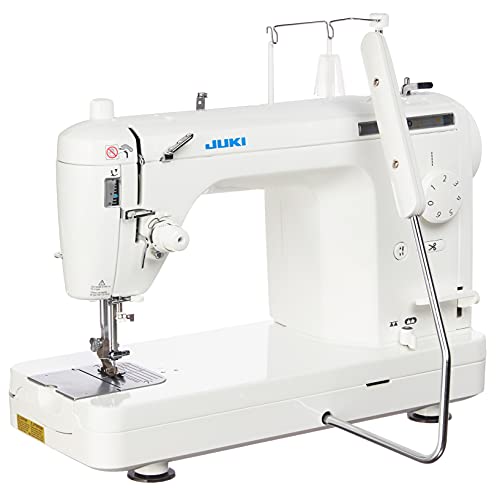
JUKI TL-2000Qi Sewing and Quilting Machine — Juki Workhorse Pick
Juki’s TL series occupies a particular place in quilting culture: the semi-professional portables, descended from industrial thinking, that quilters buy when stitch quality and mechanical honesty outrank menus. The TL-2000Qi’s listing title is as plain as the MC6650’s — a name and a category, sewing and quilting machine — and in the TL family’s case the plainness is almost a credential. These machines are bought on the line’s reputation among people who sew daily: straight, strong, consistent work, in a portable body that belies how seriously it takes the job.
Position the TL-2000Qi beside the Brother PQ1600S and the tabletop tier’s specialist wing comes into focus: two makers, one philosophy — that the straight-stitch disciplines of piecing and quilting deserve machines built around them rather than modes inside a generalist. The choice between them is made on documentation, bundle, and the buyer’s history with each maker’s machines, since neither title spends words on comparative claims. Quilters who learned on Juki’s feel tend to stay; quilters whose other machine is a Brother tend to value the shared logic. Both instincts are rational, and this guide declines to fake a tiebreaker the titles do not supply.
What can be said without importing figures is the ownership pattern the TL family inspires: these are keeper machines, bought once, maintained simply, and discussed by owners in years rather than seasons. For a quilter whose ambitions are large quilts sewn at home — with the method and support any tabletop demands — the TL-2000Qi is the workhorse expression of that plan, and its presence here beside its faster sibling lets the buyer choose the family’s tempo that matches their hands.
- Category stated in the maker’s title: sewing and quilting machine
- Throat or harp dimension: no figure appears in the product title, and the manufacturer documentation should be consulted for the measurement
- Stitch repertoire: the listing title does not publish a count or menu
- Speed figure: the listing title quotes no stitches-per-minute number for this model
- Included accessories: not listed in the title — confirm the bundle on the listing itself
- Where to buy: the JUKI TL-2000Qi listing on Amazon — check price on Amazon
Strengths
- The TL family’s semi-professional reputation is built on daily quilting use.
- A workhorse brief favors consistency and longevity over menu breadth.
- It gives Juki-loyal quilters a tabletop large-throat route without a frame.
Trade-offs
- The title states almost no specifications, so documentation does the deciding.
- Its specialist character means decorative sewing belongs to another machine.
- Newcomers to the TL concept should expect a learning period around its ways.
Best for: serious home quilters who buy on mechanical reputation and keep machines for years. Not suited for: sewists who want one machine for garments, decoration, and quilting alike.
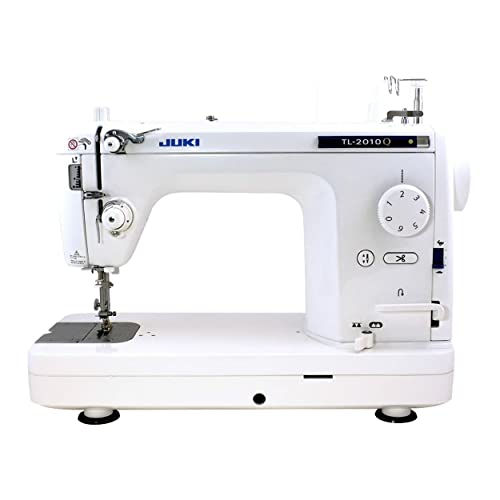
Juki TL-2010Q High Speed Sewing & Quilting Machine — High-Speed Juki Pick
The TL-2010Q is the TL family’s faster voice, and its listing title says so directly: high speed sewing and quilting machine, sold with a free bonus pack. The bonus pack matters more than such bundles usually do, because specialist machines live through their feet and accessories — the quilting feet, guides, and tools that convert straight-stitch power into quilting procedure — and a pack assembled by the maker for this model saves the new owner a compatibility apprenticeship. Confirm its contents on the listing, as with every bundle in this guide, but credit the intention: Juki is equipping the machine for work, not decorating the box.
High speed in the TL context means the same thing it meant for the Brother specialist: long piecing runs and long quilting lines completed at a pace a generalist cannot sustain without losing its composure. It also implies the same discipline — speed is a multiplier on the operator, and the quilter who buys a high-speed TL should budget the first projects as training at partial throttle. Experienced hands, though, will feel the point immediately: a machine that is calm at speed lets a production-minded quilter piece a top in an evening and quilt in long, confident passes, and that tempo is a genuine creative difference, not a specification vanity.
Between the two Jukis, the decision is tempo and bundle: the 2000Qi as the family’s plain workhorse, the 2010Q as its high-speed, bonus-equipped expression. Between the Jukis and the Janomes, the decision is philosophy: specialist straight work versus workstation range. This guide’s view is that quilting households rarely regret owning the specialist once the generalist exists — and that buyers without a generalist should start in the workstation tier and let the TL’s siren song wait for the second purchase. Households teaching the next generation to sew, incidentally, face the same patience-versus-capability balance in miniature, as the safety-first framing in Best Beginning Sewing Machines for Kids shows from the other end of the sewing life.
- Speed character stated in the Amazon listing title: high speed
- Bundled extras stated in the stated title: free bonus pack — contents to confirm on the listing
- Throat or harp dimension: not given in the model title; the manufacturer documentation carries the measurement
- Stitch count: no menu size is published in the retailer title
- Buttonhole and decorative capability: outside the TL specialist brief as presented in the title
- Where to buy: the Juki TL-2010Q listing on Amazon — check price on Amazon
Strengths
- High-speed TL performance for long piecing and quilting runs.
- A maker-assembled bonus pack equips the specialist for quilting work quickly.
- The TL family’s build reputation suits production-minded home quilters.
Trade-offs
- Bonus pack contents need confirming on the specific listing.
- Specialist scope leaves garments and decoration to a companion machine.
- Speed demands practiced hands to translate into straight, calm seams.
Best for: experienced quilters who piece and quilt in volume and value tempo. Not suited for: beginners, or households buying their only sewing machine.
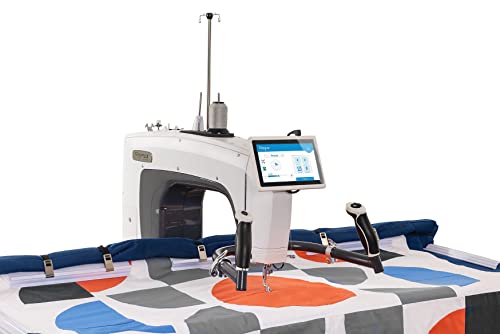
Grace 16X Elite Longarm Quilting Machine & Q-Zone Queen Frame — True Longarm Pick
Everything changes here. The Grace 16X Elite is not a sewing machine with a bigger space beside the needle; it is a longarm quilting machine sold with a Q-Zone Queen frame whose title states its length plainly: 8 feet. On a frame system, the quilt is not basted into a sandwich and pushed through a throat — the layers are loaded onto the frame’s rails, kept under even tension, and the machine travels across the quilt on its carriage while the operator stands and guides it. The throat question that defines the tabletop tier dissolves, because the limiting dimension becomes the frame’s width and the room that holds it. That is why this guide isolates the Grace in its own tier: it competes with studio equipment and with the option of sending quilts out to a professional longarmer, not with the five machines above.
The honest purchase conversation for a longarm is therefore about volume and vocation. A frame earns its floor space when quilts flow through it regularly — a prolific quilter finishing bed quilts monthly, a small quilting-for-others practice, a guild or family that will share it. The learning curve is real and different in kind: loading, tensioning, advancing the quilt, and guiding the machine in free motion are skills of their own, closer to learning an instrument than to upgrading an appliance. Buyers should also plan the room before the machine: an 8 ft frame plus working clearance at its sides and front is a furniture commitment that deserves a tape measure taken to the actual space, not an estimate.
None of that diminishes the machine’s place in this guide — it completes it. The 16X Elite is the answer for the quilter who has outgrown the tabletop tier’s method entirely, whose quilts are large and frequent, and who wants the quilting stage to become the pleasurable, standing, whole-body craft that longarmers describe. Everyone else should admire it accurately, as the top of a ladder whose lower rungs — the five tabletop machines — will serve most quilting lives completely. Note also that this guide uses only the frame version of this model from the pool; the model appears in the maker’s range in other configurations, and the listing here is the frame bundle specifically.
- System stated in the title: longarm quilting machine with Q-Zone Queen frame
- Frame size stated in its title: 8 ft frame
- Model stated in the maker’s title: 16X Elite
- Throat dimension in inches: the listing title does not state a harp measurement beyond the model name, so verify the working dimensions in the manufacturer documentation
- Room requirement: plan floor space for an 8 ft frame plus operator clearance on all working sides
- Where to buy: the Grace 16X Elite Longarm listing on Amazon — check price on Amazon
Strengths
- Frame loading ends basting and wrestling: quilts are tensioned on rails, not pushed through a throat.
- The 8 ft queen frame is sized for the large bed quilts that defeat tabletop method.
- Standing, free-motion operation turns quilting into the longarm craft itself.
Trade-offs
- It is studio furniture: the room commitment precedes the quilting commitment.
- Loading and free-motion skills form a genuine new learning curve.
- It does not sew garments or piecing the way the tabletop machines do.
Best for: prolific quilters and small quilting practices ready for frame-based work. Not suited for: occasional quilters, small rooms, or anyone seeking a better all-round sewing machine.
Two Tiers, One Table of Facts
| Machine | Tier | What the title states | What it withholds |
|---|---|---|---|
| Janome MC6650 Sewing and Quilting Machine | Tabletop workstation | Sewing and quilting machine | Dimensions, stitches, feet |
| Janome Memory Craft Horizon 8200 QCP Special Edition | Tabletop workstation | Computerized; trolley case; semi-hard cover | Dimensions, stitches |
| Brother PQ1600S High-Speed Straight Stitch Sewing Machine | Tabletop specialist | High-speed straight stitch | Dimensions, accessories |
| JUKI TL-2000Qi Sewing and Quilting Machine | Tabletop specialist | Sewing and quilting machine | Dimensions, speed, stitches |
| Juki TL-2010Q High Speed Sewing & Quilting Machine | Tabletop specialist | High speed; free bonus pack | Dimensions, stitches |
| Grace 16X Elite Longarm Quilting Machine & Q-Zone Queen Frame | Longarm frame system | Longarm; Q-Zone Queen 8 ft frame | Harp measurement beyond model name |
How Should You Decide Between a Bigger Tabletop and a Frame?
Talk to owners of the tier you are considering, in person if your guild or shop allows it, and ask the unglamorous questions: how long does setup take, what broke or annoyed you in year one, what would you measure in your room before ordering? Owners of large machines are famously candid because the machines are too big to hide behind politeness, and one honest conversation about floor space or learning curve is worth a month of reading. Bring your quilt count and your room measurements to that conversation, and the advice you receive will be about your life rather than about the speaker’s.
Count quilts, honestly, across the last two years and the next two honestly planned. A tabletop large-throat machine transforms the quilting of the quilts most people make — throws, lap quilts, bed quilts in reasonable numbers — while keeping the room, the budget, and the machine’s second life as a sewing machine intact. The step to a frame pays when the quilting stage itself has become the bottleneck and the joy: when you finish tops faster than you can face quilting them, when bed quilts are your standard unit, when the standing, drawing-with-thread character of longarm work calls to you as a craft in its own right. Quilters who buy frames for two quilts a year usually end up renting their own machine back from the room it took over.
Space arithmetic deserves the same honesty. Measure the room, then measure it again with the frame’s working clearance included and a chair, a pressing surface, and fabric storage competing for the same floor. Tabletop buyers should perform the smaller version of the same audit: a large-harp machine plus its extension surface plus a quilt’s overflow needs a table that can be defended for a weekend. Neither audit is a reason to buy small — both are reasons to buy accurately, because the quilter who planned the room quilts more than the quilter who won the argument with it. Design-led quilters, the ones whose quilts begin as artwork, sometimes find their next fascination is not a bigger throat at all but a different needle entirely, and the design-importing machines in Best Embroidery Machines for Custom Designs mark where that path leads.
What Mistakes Do Throat Shoppers Make in This Category?
The founding mistake is comparing across tiers — reading a longarm’s specification against a tabletop’s price and concluding the tabletop is a bargain or the longarm is a scam, when they are answers to different questions. The second is buying a number: chasing the largest harp figure quoted anywhere, without verifying it against the manufacturer’s documentation for the exact model and bundle, in a category where titles withhold the figure and variants multiply. The third is forgetting the workflow the number serves. A large throat with no plan for supporting the quilt’s weight, no basting discipline, and no practice at center-out quilting will still produce drift and puckers; the space removes the wrestling, not the method.
A fifth mistake is letting a retreat or a demonstration set the standard. Sewing on a flagship workstation in a tutor’s bright studio, or watching a longarmer glide through a quilt in a showroom, teaches genuine possibilities and completely false baselines: your room, your light, your quilt sizes, and your weekly hours are the baseline that matters. Quilters who buy against their own baseline end up using their machines; quilters who buy against a showroom keep auditioning. If a demonstration inspires you, let it send you home to measure your table and count your quilts first — inspiration that survives arithmetic is the kind worth spending on.
The fourth mistake is neglecting the second machine question. Specialists like the PQ1600S and the TL models presuppose a generalist somewhere in the house for zigzags and buttonholes; workstations presuppose nothing but cost more in spirit and storage; a longarm presupposes an entire piecing setup elsewhere. Buyers who map their whole sewing ecology before ordering — which machine pieces, which quilts, which mends — end up with rooms that work. Buyers who purchase one magnificent throat at a time end up with gaps shaped exactly like the tasks they forgot.
How Does Free-Motion Quilting Change the Space Equation?
Straight-line quilting moves the quilt in one direction at a time, and a rolled quilt can be managed methodically. Free-motion quilting — feed dogs lowered or covered, the operator’s hands moving the quilt in any direction under the needle — turns the throat into a drawing surface, and space stops being about passing a roll through and becomes about how much quilt can lie flat and glide around the needle. This is where large-throat tabletops earn their reputation most honestly: the flat, supported neighborhood around the needle is the canvas, and every extra inch of it is an inch of drawing you can do before stopping to reposition the bulk. Quilters planning a free-motion practice should therefore weigh the workspace claims of the workstation tier even more heavily than straight-line quilters do.
Practise sandwiches deserve a permanent place in a free-motion quilter’s room: two fat quarters of fabric around batting, kept by the machine, warmed up on at every session. Five minutes on the practice piece returns your hands to the rhythm before the real quilt is at risk, and the accumulating stack of practice sandwiches becomes a diary of your improving line — early wobbles preserved honestly beside later, flowing curves. Teachers insist on them for a reason that has nothing to do with humility: muscle memory decays between sessions, and the warm-up is how a home quilter with a weekly hour keeps progressing instead of relearning. Space helps free-motion, but warm hands make it.
Technique fills the space the machine provides. Free-motion stitch length is made by your hands’ speed against the machine’s pace, so consistency is a rhythm learned over practice sandwiches — small, basted test pieces that exist to be ruined beautifully while the rhythm forms. Gloves or other grip aids, a surface the quilt can slide on, and a chair height that lets your forearms rest while your hands float the fabric all matter as much as the machine model. The specialists in this guide can free-motion within their straight-stitch brief — the stitch is the same stitch, directed by hands — while the workstations add the option of decorative programmed patterns for the quilting stage. Either way, the quilter’s hands are the feature; the throat is the room they work in, and this category sells room.
What Does a Day of Frame Quilting Actually Involve?
It begins standing, with loading: backing onto its rail, batting draped, top aligned and secured, the sandwich assembled by the frame rather than on a floor. New longarmers are often surprised that loading is the skill — a quilt loaded crooked quilts crooked, however gifted the operator — and that it becomes swift with repetition until it feels like making a bed. The quilting itself is physical in a way tabletop work is not: you walk the machine’s length, guide with both hands, and think in zones the frame’s width defines, advancing the quilt as each zone completes. Quilters who love it describe a whole-body rhythm closer to weaving at a loom than to sewing at a table.
The day ends with unloading and the small shock of a finished bed quilt in hours rather than the tabletop’s sessions. That throughput is the frame’s economic soul: it converts the quilting stage from the bottleneck into the briefest part of a quilt’s life, which is why frames belong to prolific makers and small quilting services. It is also why this guide insists on the volume question before the Grace’s charms are weighed — a frame used monthly is a monument, while a frame used weekly is a workshop. The tabletop machines, by contrast, ask nothing of the room between quilts and sew the household’s other work in the intervals, which is why most quilting lives, examined honestly, are tabletop lives lived well.
How Do Large Machines Change the Maintenance Picture?
Scale changes emphasis rather than kind. A large-throat tabletop consumes the same lint discipline as any quilting machine — brush the bobbin region after quilting sessions, retire needles on schedule — with one addition: the workspace itself must be kept clean and smooth, because a quilt gliding across a gritty surface picks up drag that masquerades as feeding trouble. Wipe the bed and any extension surface before a quilting session, and check that the join between machine and table sits flush; a ridge that a garment never noticed will catch a quilt’s seam allowance a hundred times an hour.
Frames add their own liturgy: rails and carriage tracks kept clean so the machine travels without a tremor, wheels and encoders treated as the precision parts they are, and the loading hardware checked for the burrs that can snag a backing fabric. None of this is burdensome, but it is scheduled rather than occasional, and a prospective longarm owner should welcome that — frame quilting is a workshop practice, and workshops run on maintenance rhythms. Storage, finally, inverts between the tiers: the tabletop machines need a cover and a cupboard decision, while the longarm needs the room itself kept dry, dust-aware, and free of the household drift that colonizes any flat surface. Buy the tier whose maintenance liturgy sounds like a pleasure rather than a tax, because you will be performing it for as long as you quilt.
Which Accessories Matter Most Once the Machine Is Home?
For the tabletop tier, the first accessory is almost always support you did not know you needed: an extension surface if the bundle lacked one, or a slider sheet that lets a quilt glide for free-motion work. The second is the quilting foot appropriate to your style — the even-feed style for straight quilting under power, the open free-motion style for drawing with thread — bought for your exact model family after confirming compatibility in the documentation. The third is unglamorous: spare bobbins of the correct type, wound in advance, because a quilting session interrupted at every bobbin change loses the rhythm that keeps lines straight. Rulers and templates for ruler-work quilting come later, when a specific design demands them, and they should be bought design by design rather than as a speculative set.
Thread choice scales with the machine, quietly. Large quilting projects consume thread at a rate garment sewing never approaches, and both tabletop and frame quilters learn to buy cones or large spools in their staple colors rather than living spool to spool. Long quilting lines also expose thread quality mercilessly — a thread that shreds at speed or fuzzes in the needle will announce itself across a whole quilt — so the big-machine owner standardizes on threads the machine demonstrably likes, discovered on practice sandwiches, and stops experimenting mid-quilt. It is a small discipline with an outsized effect on how peaceful a large machine feels to own.
For the frame tier, the accessory logic runs through loading and guidance: leaders and clamps that make loading swift and square, a reliable way to keep the quilt’s edges true as it advances, and lighting that serves a standing operator along the frame’s whole length. In both tiers the principle is identical — accessories should be purchased by the friction they remove, in the order the friction appears. A new owner’s first month generates a precise shopping list written by the quilts themselves; buying ahead of that list produces the drawer of unused tools every experienced quilter can show you, and the wisest sentence in quilting retail remains: sew the first quilt, then shop.
How Should a Buyer Verify the One Number the Titles Withhold?
Methodically, and in writing. Start with the manufacturer’s own documentation for the exact model name — including suffixes and edition words, because quilting lines reuse numbers across variants whose dimensions differ. Measure the harp the way quilters use it: from the needle to the pillar, and the height under the arm as well, since a wide but low space rolls a bulky quilt differently than a tall one. If a retailer listing and the documentation disagree, the documentation wins, and if two documents from the maker disagree, that is a question to resolve with the maker before money moves, not after a quilt is basted.
Then translate the number into your own quilts before you celebrate or despair. Roll your largest typical quilt the way you quilt it, measure the roll’s diameter honestly, and compare it with the verified space: the roll must pass and turn, not merely fit at its slimmest. Many quilters discover at this step that their method — quilting in halves, or choosing lower-loft batting — matters more than an inch either way, which returns the decision to the tier and character questions this guide has argued throughout. The number is a fact to verify, not a verdict to obey, and the buyer who treats it that way will choose well among these six.
Final Recommendation
Decide the tier with your quilt count and your floor plan, then let character choose the model. Tabletop quilters who want the complete workstation should look first to the Janome pair — the MC6650 as the tier’s reference machine, the Horizon 8200 special edition as its computerized, travel-ready expression. Quilters whose hearts are in piecing and straight lines should choose their specialist by tempo and tribe: the Brother PQ1600S for straight-stitch focus, the Juki TL-2000Qi for the workhorse at standard pace, the TL-2010Q when high speed and a bonus pack match a production rhythm. And the quilter who has honestly outgrown the table — quilts queuing, room measured, vocation clear — should step up to the Grace 16X Elite and its 8 ft frame without pretending it is anything other than the studio commitment it is. Buy the tier your quilting life has already reached, verify the one measurement the titles leave to documentation, and the next big quilt will feel less like a wrestling match and more like the craft you meant to practice.
Frequently Asked Questions
How large a throat do I actually need for a queen quilt?
There is no honest universal number, which is why this guide prints none: quilters complete queen quilts on standard domestic machines using roll-and-support method, and large-throat tabletops make the same quilt calmer rather than merely possible. What changes with space is effort and session length, not permission. Verify the harp dimension of any shortlisted model in the manufacturer documentation, then judge it against your quilt sizes and your tolerance for wrestling — and remember that a frame removes the dimension from the question entirely.
What is the difference between a large-throat machine and a longarm?
Architecture. A large-throat tabletop is a sewing machine with an enlarged workspace beside the needle; the quilt is basted and moved under a stationary needle. A longarm sits on a frame: the quilt layers are loaded onto rails under tension, and the machine moves over the stationary quilt while the operator stands. The skills, rooms, budgets, and finished-quilt throughput differ accordingly, which is why this guide reviews them as separate tiers rather than as good and better versions of one thing.
Can a straight-stitch specialist really be a quilting machine?
Yes — for the majority of quilting that is piecing and straight-line work, it can be the best quilting machine in the room. Piecing is straight stitching at a precise allowance; straight-line quilting is straight stitching at a recorded length. What a specialist cannot do is everything else: zigzag appliqué edges, decorative stitches, buttonholes. Owners pair specialists with a generalist machine, and the pairing, not either machine alone, is the complete quilting setup.
Do I need to baste a quilt for a frame longarm?
No — and that is one of the frame’s defining advantages. The backing, batting, and top are loaded onto the frame’s rails separately and held under tension by the system, so the pinning and basting stage of tabletop quilting disappears. In its place comes loading technique: aligning layers on the rails evenly so the quilt finishes square. It is a different preparation skill, quicker once learned, and a major reason prolific quilters migrate to frames.
Will a bigger throat improve my stitch quality?
Indirectly, yes, and directly, no. Stitch formation is the machine’s mechanism, and a well-kept smaller machine forms beautiful stitches. What space improves is everything around the stitch: the quilt lies flatter, feeds straighter, and stops dragging the work off line, so the quality you already have survives contact with a large quilt. Buy space for handling, buy the machine’s tier for formation quality, and keep needles fresh for both — that trio covers nearly every quilting complaint this category receives.
Should I send quilts out to a longarmer instead of buying a frame?
For many quilters, yes — and the arithmetic is friendly. Sending a quilt out buys professional quilting with no room, no learning curve, and no maintenance, at a per-quilt cost that takes a long time to equal a frame’s purchase and footprint. The frame wins when volume is high, when turnaround control matters, or when quilting the quilt yourself is the point of the hobby rather than a means to a finished bed. Neither choice is a surrender: some of the finest home quilters piece on a tabletop specialist, send the sandwich out, and bind it at home with complete satisfaction. Know which stage of quilting you actually love, and spend your money and your room on that stage.
Is a large-throat machine worth it for a beginner quilter?
Usually not as a first machine, and occasionally yes as a deliberate one. A beginner’s limiting factors are cutting accuracy, seam discipline, and basting — none of which a throat enlarges — and a standard machine teaches them at a gentler price of admission. The exception is the beginner who is certain, with evidence from classes or borrowed machines, that quilting is a long-term vocation and that large quilts are the destination; that buyer can reasonably start at the workstation tier and grow into its space. Everyone else should let the first quilts, sewn on something simpler, make the case for space with finished work rather than with hope.
Related Guides
One final perspective before the related reading: throat space is a means, and the end is a quilt that gets finished and used. Quilters measure their lives in finished quilts, not in inches of harp, and every machine in this guide — from the plainest TL workhorse to the frame in its own room — exists to move one more quilt from intention to bed. Choose the tier that your rooms and your rhythm support, keep its surfaces clean and its needles fresh, and the quilts will accumulate in the only ranking that has ever mattered: the one draped over your family’s furniture.
Large quilts travel beyond the sewing room — to cabins, camps, and guest beds where a lighter quilt earns its place. For finished quilts built around portability and warmth-to-weight, browse Best Lightweight Camping Quilts and notice how much of their design your new machine could borrow.


